

Part I: The Safe Plays: Brands You Know and Why They Work
Look, we get it. You've been wearing that smartwatch for years, and it's been fine and useful somehow, but something's shifted. Maybe you landed that promotion. Maybe you're just tired of wearing something almost disposable with no real character or personality. Whatever the reason, you're here because you want something real—a proper luxury watch—and you've got about five grand to make it happen.
Smart budget. Seriously. It's enough to get into genuine watchmaking without the madness that comes with chasing Rolex waitlists or remortgaging your house for a Patek Philippe. But here's what nobody tells you: that same $5,000 buys you completely different experiences depending on which brand you choose, where it's made, whether you buy new or pre-owned, and frankly, how old you are. What makes perfect sense when you're 24 and starting out is totally wrong at 42 when you're established. We trade watches every day at TheWatchCurators, and we've had this exact conversation hundreds of times. So let us try and save you from the mistakes we see people make, and point you toward what actually makes sense. This being said, it is also fun to make mistakes as it is the best way to learn and improve!
THE BRAND EQUITY QUESTION: WHY MOST FIRST-TIMERS START WITH THE OBVIOUS
Before we dive in, let's address the elephant in the room. You probably know Rolex. Maybe Omega. Possibly Tudor or Cartier. But have you heard of Grand Seiko? Kurono Tokyo? NOMOS Glashütte? Baltic? Furlan Marri or MAGANA, our founder’s very own addition to the Microbrand space? The answer is, you probably have not. And that's the tension every first-time buyer faces: Do I buy the name I know, or do I buy the best watch for the money?
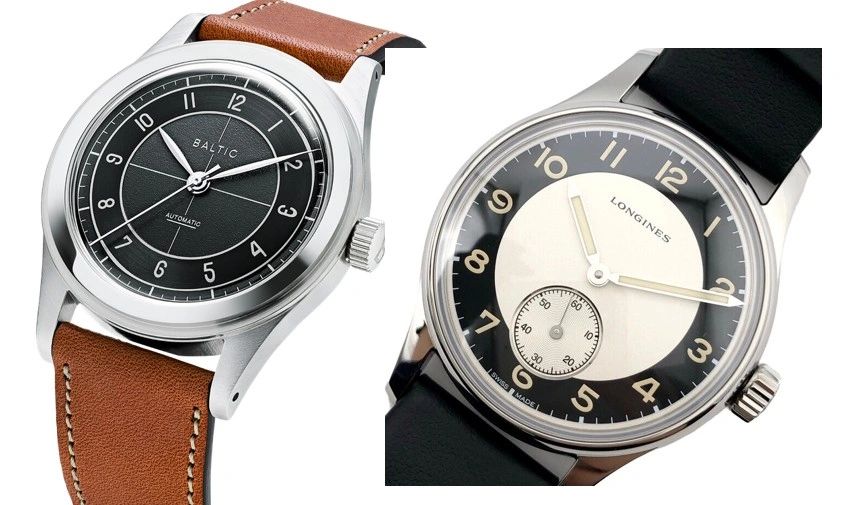
Here's our honest take: for your first luxury watch, brand equity does matter a lot more than watch nerds (like yours truly) would agree to admit. When someone asks "nice watch, what is it?" you don't want to spend five minutes explaining why your German-made NOMOS is actually more interesting than their run-of-the-mill Rolex. You just want to say "Tudor" or “Tag Heuer” or “Omega” and move on with your life. But—and this is important—you should know what else exists. Because by watch number two or three (and there will be other watches, trust us on this), you'll be ready to explore beyond the obvious and find ways to express your own personality, personal branding and taste through your wrist game. And some of the best watchmaking in the world today isn't coming from Switzerland.
So we’re splitting this guide into two parts. Today, we'll cover the brands you've heard of—the safe plays that give you credibility and peace of mind. In Part II, we'll show you where the real value lives if you're willing to be more adventurous.
TUDOR: THE WATCH EVERYONE SHOULD CONSIDER FIRST
If you were to sit with us tomorrow with $5,000 and said "I want my first luxury watch, it needs to look great, fell great and have a good level of recognition" We'd walk you straight to the Tudor Black Bay 58 (We will soon have a great example available on the site). Retail is around $4,500. No waitlist. No games. You can walk into almost any authorized dealer today and walk out with one. Do you understand how rare that is these days? Try buying a Rolex—Tudor's big brother—and you'll be on a waitlist for months, maybe years, while the sales associate sizes up whether you're "worthy." With Tudor, they actually want to sell you a watch, as they should.
The Black Bay 58 is the perfect size at 39mm—it fits under a shirt cuff, works on smaller wrists, and doesn't scream "look at my watch!" The Black Bay 54, slightly dressier at 37mm and $4,050, is even better if you're leaning toward classic proportions.
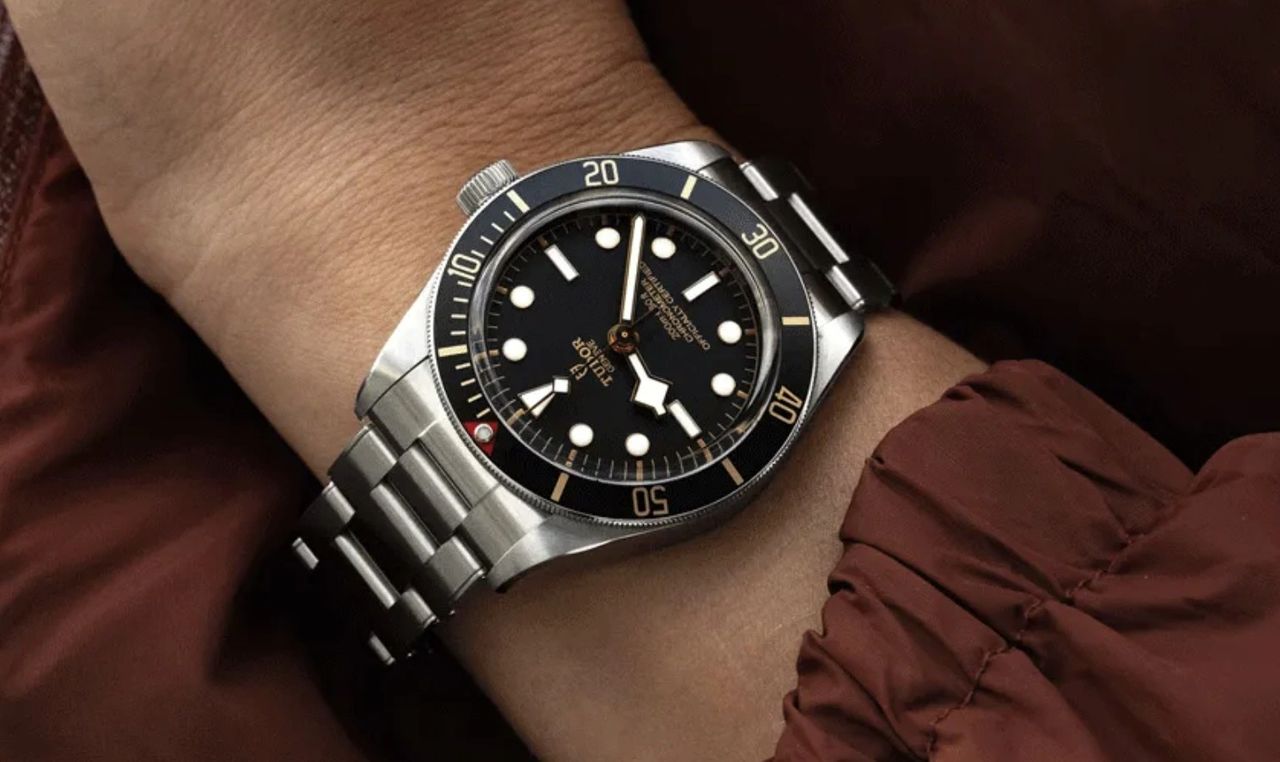
Real talk about pricing: don't expect much of a discount on new Tudor. Maybe 5% if the dealer really likes you and business is slow. A pre-owned one however, in good condition, of a recent year and as a full set (check out our watchspeak to understand better the lingo) can be gotten with a solid saving. Indeed, Pre-owned Black Bay 58s are trading around $2,700-3,400 depending on condition. That's a 40% depreciation hit from retail, which means you can buy a two-year-old watch in excellent condition for $1,000-1,500 less than new. If your budget is tight, that's real money. We actually have a great example from 2022 in perfect condition right here for you!
Should you go vintage Tudor? No. Just... no. Well, not really no, but when it comes to vintage, buy the seller before you buy the watch. The vintage Tudor market is a minefield of Frankenstein watches (seriously, check the watchspeak page) and questionable authenticity. Unless you're buying from someone you trust completely, stick to modern.
Who's this perfect for? If you're in your 20s, this might be your endgame watch at this budget. It's got heritage (Tudor is Rolex's sister brand), it's built properly, and it works in every situation—job interview, weekend BBQ, fancy dinner, you name it. In your 30s? Still great, especially if you want something sporty that doesn't look like you're trying too hard. In your 40s? Consider it only if you specifically want a casual sports watch. You might be ready for something with more elegance (keep reading).
Our advice: Buy a solid and recent pre-owned Tudor unless you wish to “build” a profile with your Authorized Dealer as indeed, Tudor and Rolex AD’s are often one and the same. If you go pre-owned though, you'll get the same watch for 30 to 40% less.
LONGINES: THE VALUE PLAY WITH SERIOUS HERITAGE
Here's a brand that doesn't get enough love: Longines. We know, yes—it's not Rolex or Omega. But listen for a second. Longines is one of those brands you buy when you actually understand watches, not just logos.
They've been making watches since 1832, so there’s a solid heritage there. They were good enough to supply movements to other luxury brands (including Rolex, who would have guessed!) back in the day. Today? They make absolutely stunning watches that punch way above their weight class at very honest prices offering solid and reliable watchmaking basked in history.
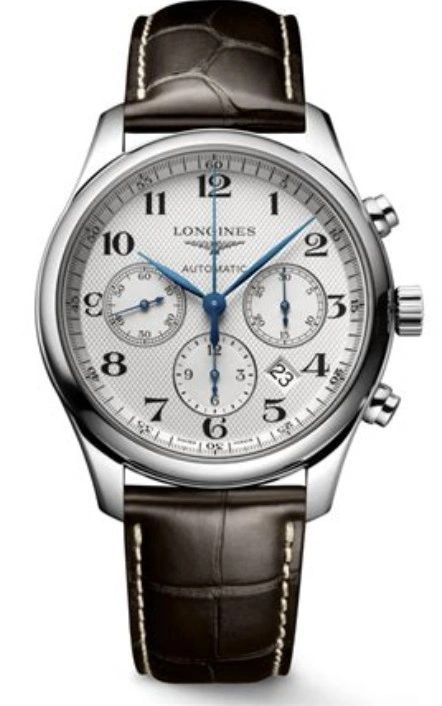
The Spirit collection runs $2,700-3,900 retail. Clean design, in-house movements on some models, and they actually look more expensive than they actually are (if that is something important for you). The HydroConquest dive watches start at $1,300-2,100, and the Master Collection dress watches run $2,000-4,500.
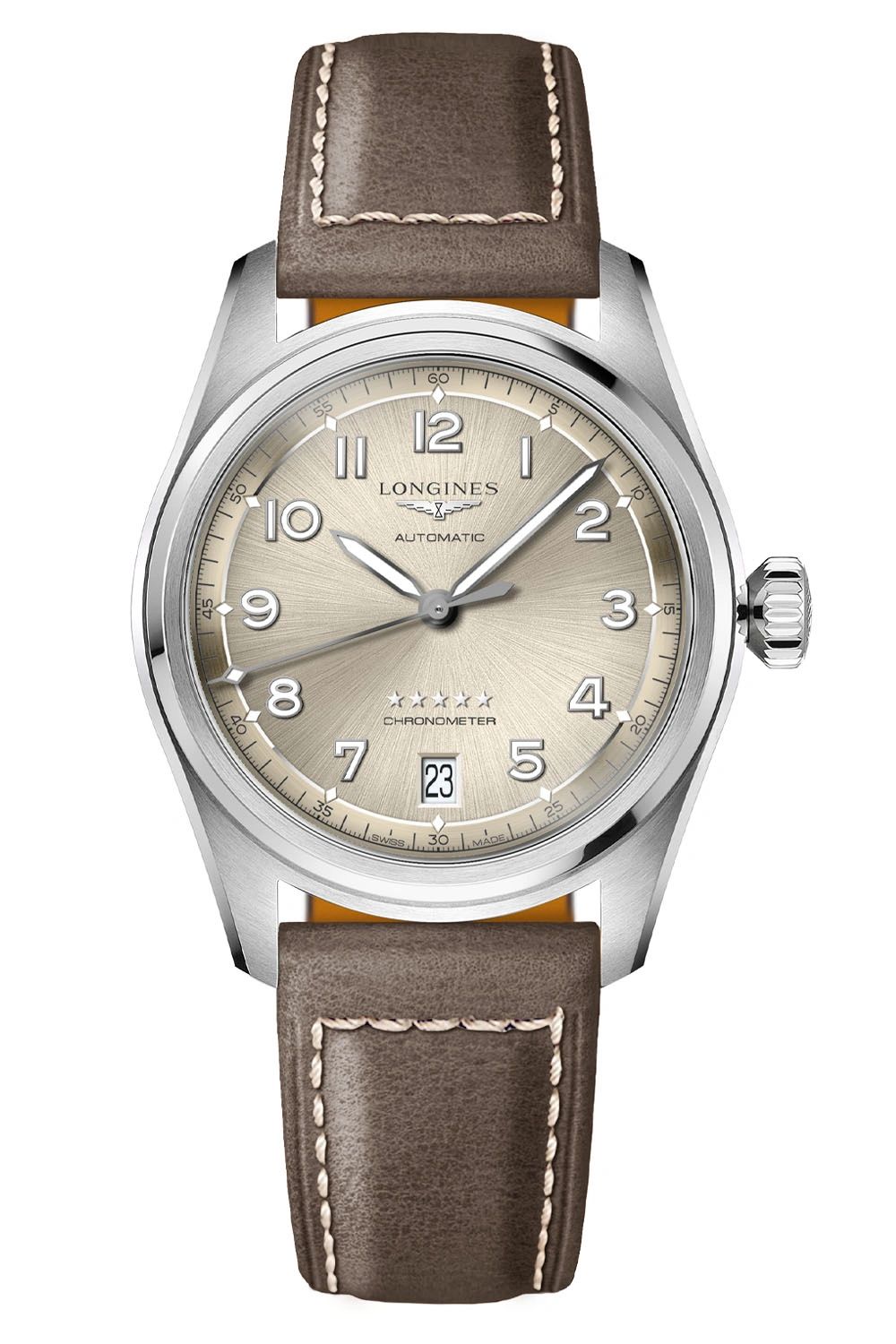
The beautiful part for us consumers? Longines authorized dealers are actually motivated to sell. You can negotiate a decent discount off retail just by asking nicely. Grey market? You're looking at 20-35% off depending on the model. For a $3,500 watch, that's $700-1,200 in your pocket.
The catch? Longines depreciation is brutal. That $3,500 watch will be worth $1,800-2,200 in the pre-owned market a year later. This is simultaneously the best news and worst news. Best because you can pick up incredible deals pre-owned. Worst because if you buy new, you're taking a hit.
Our advice: Buy pre-owned Longines unless you absolutely must have that new-watch experience. You'll get the same watch for 40% less.
Now, vintage Longines is where things get really interesting. They made some absolutely gorgeous pieces in the '50s and '60s—we're talking dress watches that would cost $15,000 if they had "Patek Philippe" on the dial instead of "Longines." You can find them for $800-2,500. The problem? Service can run $500-800, and you need to know what you're looking at to avoid buying someone's cobbled-together project. As always with vintage – and we won’t say this enough – buy the seller before you buy the watch. Trust is PARAMOUNT! Only go vintage if you're buying from a reputable dealer, auction house or someone that you can genuinely trust and who is recognized as an actual expert!
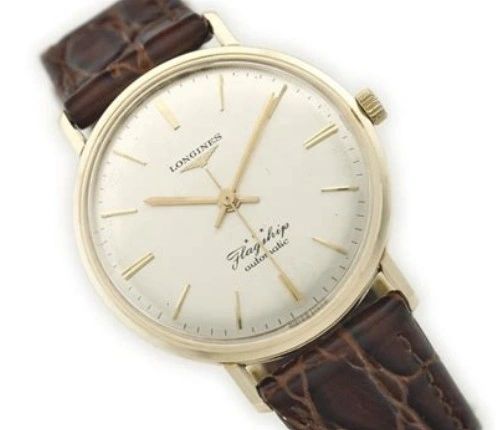
Age matters here. If you're in your 20s, get the HydroConquest or Spirit. They give you luxury credibility without the financial stress. Save the rest of your budget or allocate to another watch in a different style. In your 30s? The Master Collection dress watch is perfect. You're going to weddings, client dinners, maybe you're getting married yourself. You need something elegant, and Longines gives you that at half the cost of Jaeger-LeCoultre (which is another one of those brands you buy when you actually understandwatches) In your 40s? Consider vintage. A 1960s Longines chronograph tells people you have taste beyond logos. That shows sophistication, but we would not advice a modern Longines at this age group though.
OMEGA (PRE-OWNED): IF YOU WANT THE NAME
Let's be clear: you're not buying a brand new Omega at this budget. Entry-level Omegas start at around $5,200 retail and climb fast from there. But pre-owned? That's a completely different story.
Omega's (undeserved) depreciation is your best friend. A $6,500 retail Aqua Terra can be yours for $3,500-4,200 in excellent condition with box and papers. That's where your $5,000 budget becomes really interesting.
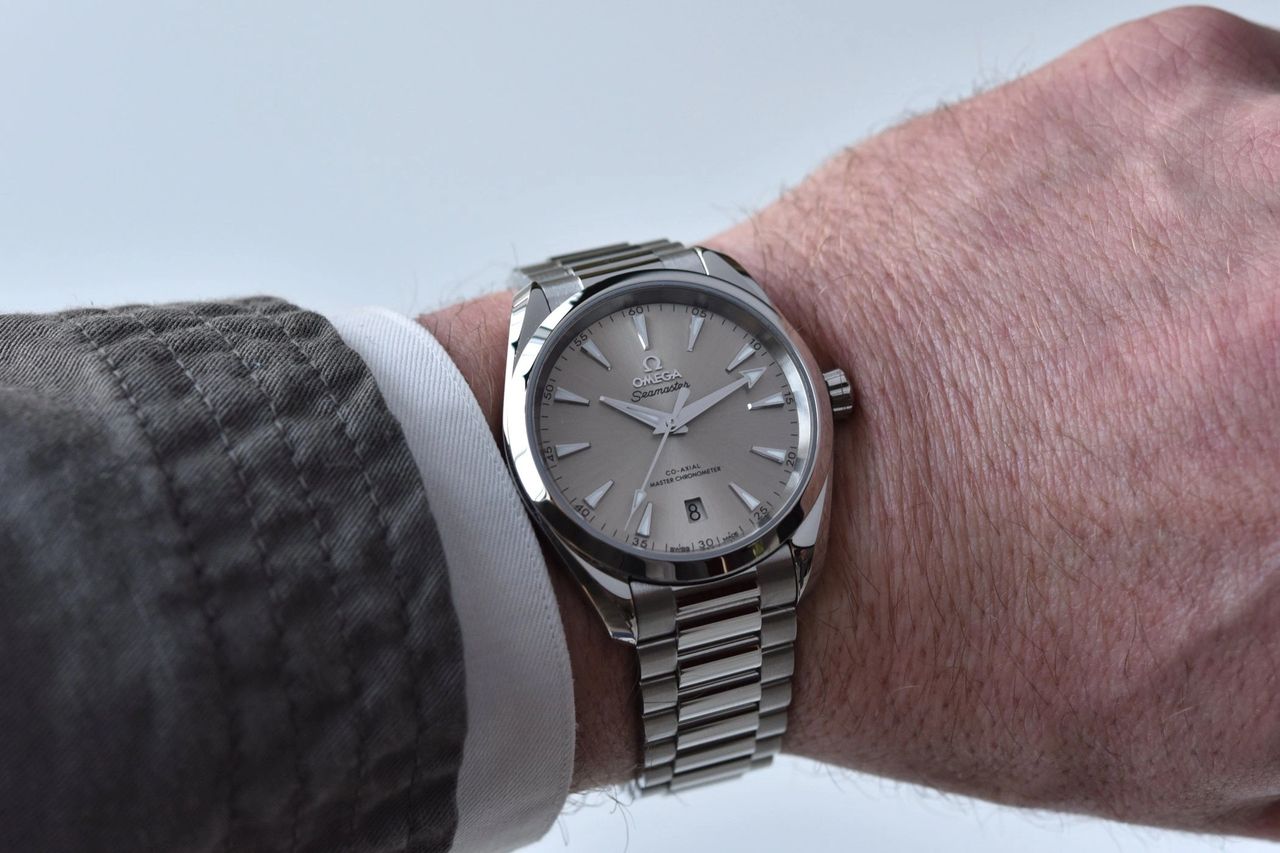
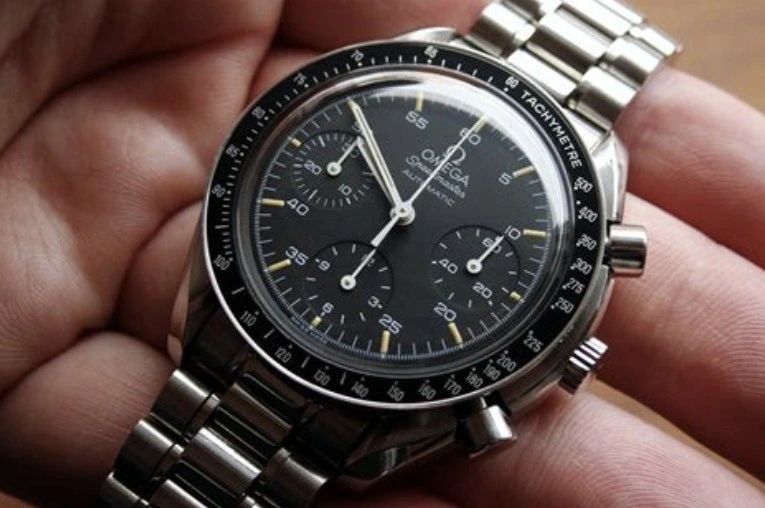
The Aqua Terra is Omega's everyday sports watch—dressy enough for a suit, casual enough for jeans. It's the watch that James Bond would actually wear to a business meeting (not the Seamaster he dives with). It's also the watch that quietly tells people you've made it without screaming about it. Want the "moon watch" story? The Speedmaster “Reduced” trades pre-owned around $2,500-3,800. It's smaller than the Professional (39mm vs 42mm), which some find it more wearable, and you get to say you own a Speedmaster. That story never gets old.
What about new Omega with discount? You might squeeze 10% off retail from an authorized dealer if you're an exceptional negotiator and they're desperate, but nothing beyond that, and certainly nothing on their “star” collections like the Speedmaster or the Constellation. You're better off just buying pre-owned.
Vintage Omega is tempting—you can find beautiful pieces from the '60s and '70s for $1,500-3,500, sometimes even less if you’re lucky. But – as always with vintage - it's also dangerous territory. Frankenwatches (seriously though, get to this page for the lingo) are everywhere. Only buy from a highly reliable and trustworthy source!
Here's who should be looking at Omega. If you're in your 20s and working in finance or tech, a pre-owned Aqua Terra gives you serious wrist credibility. It's a grown-up watch that fits your age. Early 30s? The Speedmaster Reduced is perfect. You get the heritage, the story, the NASA connection—all at less than half the price of the Professional. Early 40s? a vintage Seamaster or a modern Globemaster. You've earned brand recognition. Wear it.
BAUME & MERCIER: FOR THE CONNOISSEUR WHO VALUES UNDERSTATED ELEGANCE
If you appreciate Geneva watchmaking without the markup, Baume & Mercier is the brand that shows you understand value and heritage. The Clifton Baumatic ($2,500-3,200), the Riviera ($3,200-3,800), and the Capeland ($2,800-3,500) are all exceptional watches that demonstrate you care about Swiss craftsmanship and timeless design, not just logo recognition.
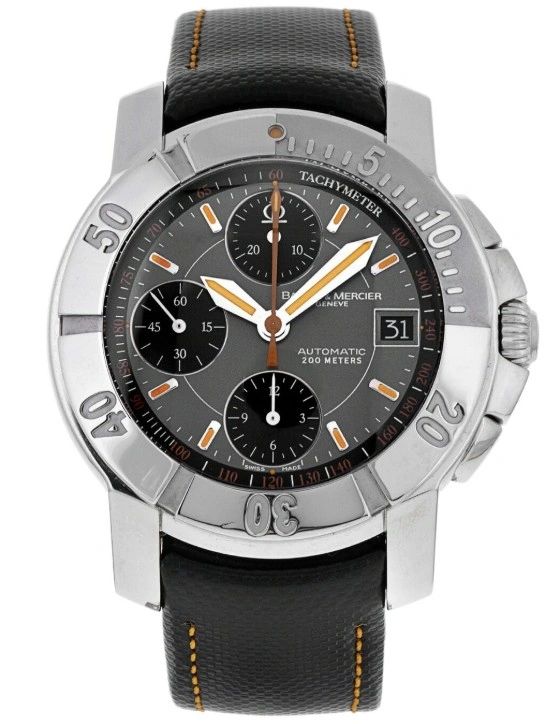
For reasons beyond our understanding, the authorized dealers are always happy to consider giving away a decent 10-15% discount off retail, they're readily available (zero games, zero waitlists), and the quality-to-price ratio is genuinely impressive. Buy new from an AD, enjoy the full warranty, don't overthink it.
The Clifton Baumatic with its 5-day power reserve and COSC certification (do check out our watchspeak page to make sense of the lingo) is particularly perfect if you're in your 20’s or even your 30s. It's refined, wears elegantly, and shows you appreciate technical substance over flash. In your 40s, the Riviera gives you Gerald Genta-inspired design DNA at a fraction of what you'd pay for an AP Royal Oak or Patek Nautilus—and honestly, most people won't know the difference, but you will. In your 50s? You're probably past the point where a modern Baume & Mercier makes sense but a vintage one could be a lot of fun and you can rest assured that it can be a conversation starter. You want the name on the dial to open doors, not just impress watch nerds.
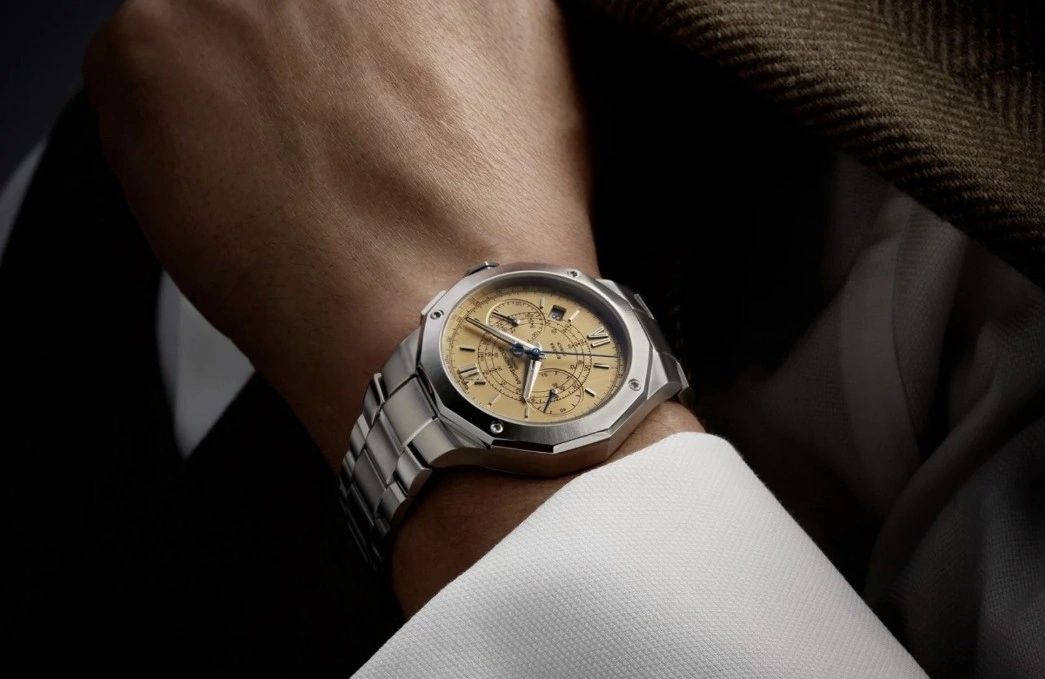
THE BRANDS TO SKIP (SORRY, BUT IT'S TRUE AT THIS BUDGET)
Rolex: Nothing new under $6,500, and even then, good luck finding it. Pre-owned Air-King from 20 years ago might hit your budget, but why buy someone's old watch when you can get a much more recent or even brand new Tudor (essentially the same watch)?
IWC, Breitling, Jaeger-LeCoultre: All start above your budget new. Pre-owned might work, but you're better off saving another $1-2K and doing it properly. We certainly will write another piece for budgets of 5-10K USD and these names will certainly make the cut!
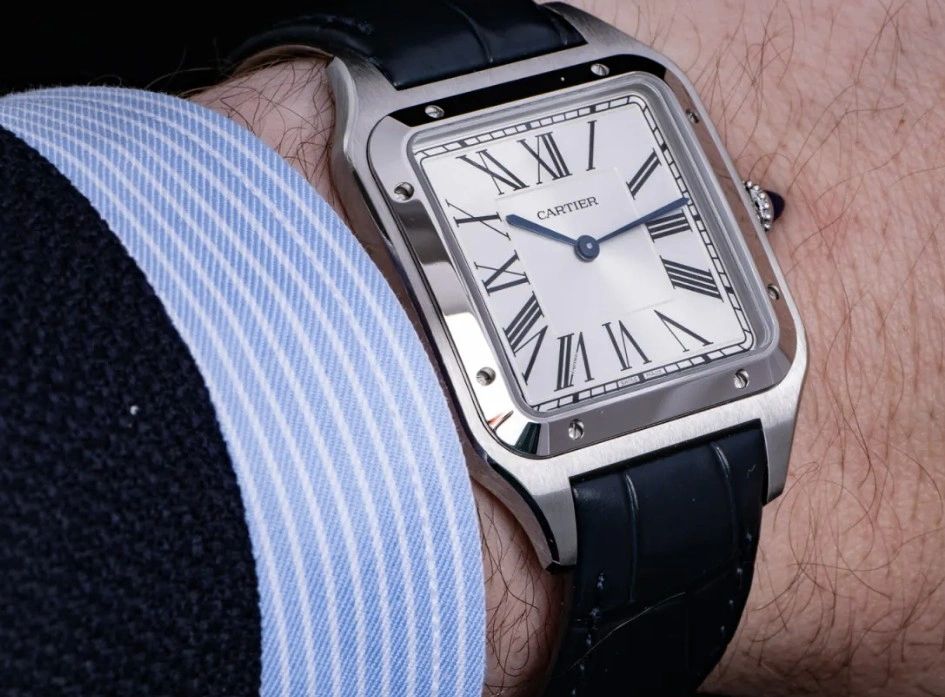
Cartier men's watches: Under $5K, you're limited to discontinued quartz pieces. If you want Cartier, save for the Santos at $7,400+. Our favorite pick would be the timeless Santos Dumont
TAG Heuer: Controversial opinion incoming—They depreciate harder than almost anything in this category, but a little birdy tells us that this will change in the years to come. A $4,000 TAG becomes $2,000 pre-owned overnight. We’d recommend you buy pre-owned and save 50%. This is of course not true for all their models. If we were to remove the “financial” aspect of the conversation, the brand has very solid fundamentals, great heritage, fantastic recognition and genuine watchmaking techniques that can sometime surpass that of many so called premium luxury brands!
NEW VS. PRE-OWNED VS. VINTAGE: THE REAL STORY
People sometimes have this question: "Should I buy new or pre-owned?". Here's the honest answer: it depends on what you want from the experience
Buy new from an authorized source if:
- This is your first real watch and you want the full experience— unboxing, warranty, knowing you're the first owner. There's something special about that.
- You’re thinking you may want to build a relationship directly with the authorized dealer or the brand (if you’re in their own boutique)
Buy new from the grey market source if:
- This is your first real watch and you want to know you are the real first owner/user of the watch.
- You want a watch that you either can’t get from an authorized source (wait lists and other hurdles) or you want to pay a little less than the official retail price (this applis only to the less hyped brands that command permiums).
Buy pre-owned if:
- You want to maximize value and you don't care about being the first owner.
- You wish to reduce the depreciation risk of your watch.
- You're comfortable with an older watch that is not in brand new condition (it could always be serviced and/or polished) to confirm its “new” status. It will be “new” to you of course, but a “light” polish, a strap change can do the trick in making it.
Buy vintage if:
- You're in your 40s and you want a watch with character and story.
- You're buying from reputable dealers with warranty/service history.
- You accept that service at a decent and proper watchmaker will cost a decent 10-20% of the watch value every 5-7 years.
- You understand that vintage is about emotion, not investment.
THE INVESTMENT CONVERSATION NOBODY WANTS TO HAVE
Allow us to be brutally honest: don't buy any of these watches as an "investment." If you are looking to invest, please reach out to the professionals who will direct you towards financial products that are studied and made for that. While many consider watches to be an asset class, they are not. Well, the very vast majority of watches (99.99%) are not. The “Investment” grade watches are uber rare and we can certainly help you find them but that’s another topic all together.
Here's what actually happens:
- Tudor Black Bay 58: Drops 30-40% in value immediately, then stabilizes. Might appreciate 10-20% over a decade if you're lucky. NOT AND INVESMENT (it doesn’t even catch up with inflation)
- Longines anything: Loses 40-50% value the moment you walk out of the store.
- Pre-owned Omega: Already took the depreciation hit. Might hold, might drop another 10-15%.
- Vintage: Totally unpredictable. Could double. Could need $1,200 in service and tank.
The only "investment" that matters is this: a well-chosen watch at this budget should give you 15-20 years of daily wear. That's $250-300 per year. That's the real math. AND it’s a great “Personal brand” investment, as it sends a message about you and your personality.
Don't buy because you think it'll go up in value. Buy because it makes you happy every time you check the time.
WHAT TO DO NEXT
Reading about watches is fine. Research is smart. But at some point, you need to stop reading and start taking action. Go to an authorized dealer. Ask to try on a Tudor Black Bay 58. Feel the weight. See how it sits on your wrist. Notice how the light hits the dial. Then try on a Longines Spirit. Then an Omega, and then anything else you fancy. You'll know within 30 seconds which one is yours because watches have this very unique feature about them… they talk to you!
But before you buy, read Part II of this guide. Because I'm about to show you brands you've probably never heard of—brands from Japan, Germany, the UK, France, the US, or even the UAE that are making some of the best watches in the world. Brands where your $5,000 goes twice as far. You owe it to yourself to know what else is out there before you commit.
Coming soon: Part II – Beyond the Obvious: Where the Real Value Lives
Omar Chaoui runs The Watch Curators in Dubai, where he sources and trades watches from Switzerland, Germany, Japan, and beyond. If you want straight talk about what's actually available and what it costs, reach out at thewatchcurators.com.


