

The Timeless Flip: Jaeger-LeCoultre and the Enduring Legacy of the Reverso
In the serene Vallée de Joux, nestled deep within the Swiss Jura Mountains, a quiet revolution began in 1833. Charles-Antoine LeCoultre, a self-taught watchmaker and inventor, established a small workshop in the village of Le Sentier. What started as a modest atelier would, in time, evolve into one of horology’s most revered names: Jaeger-LeCoultre. Known today as “La Grande Maison,” the manufacture embodies a rare combination of artistic sensibility and technical mastery, with more than 1,200 in-house calibers to its name.
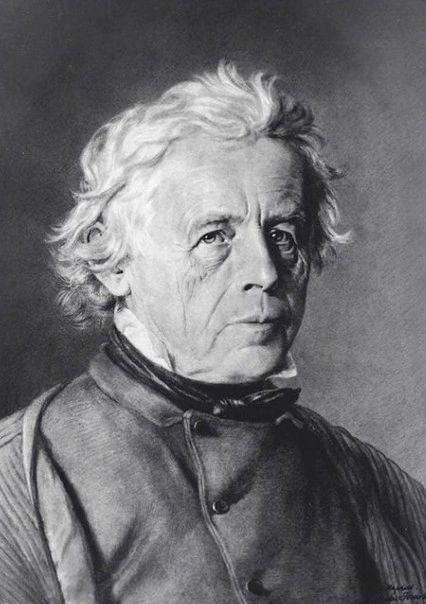
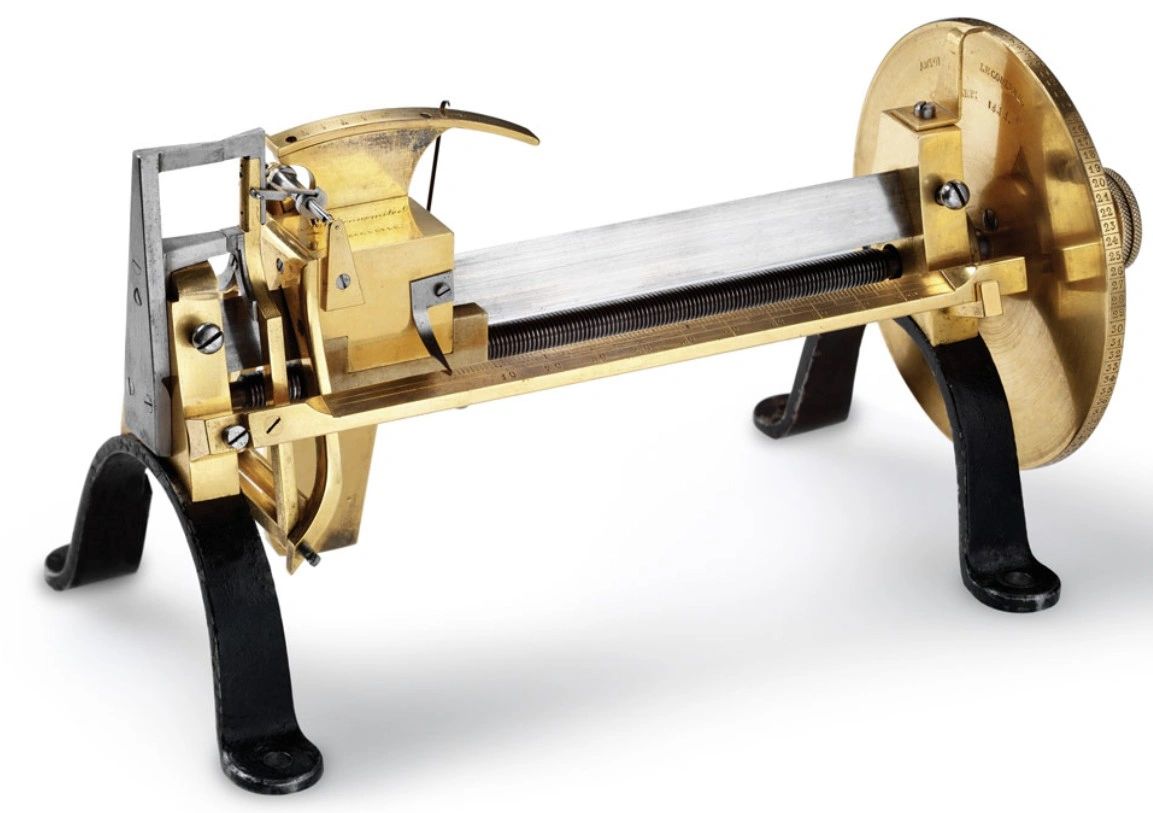
LeCoultre was no ordinary craftsman. His inventive spirit drove him to create precision tools that standardized watchmaking long before industrialization reshaped the craft. His “Millionometer,” patented in 1844, was the first instrument capable of measuring to a micron. By the late 19th century, the company employed more than 500 artisans under one roof—a pioneering model of vertical integration in an era when most watch brands relied on a scattered network of small suppliers.
This ability to innovate and to scale, without compromising artistry, gave Jaeger-LeCoultre the foundation to produce some of the most important movements of the 20th century. From the world’s thinnest calibers—commissioned in collaboration with Parisian watchmaker Edmond Jaeger—to complications that would power watches for Patek Philippe, Audemars Piguet, and Vacheron Constantin, the maison became a cornerstone of haute horlogerie. Yet among its many achievements, one creation came to define its identity more than any other: the Reverso.
The Polo Problem That Sparked a Revolution
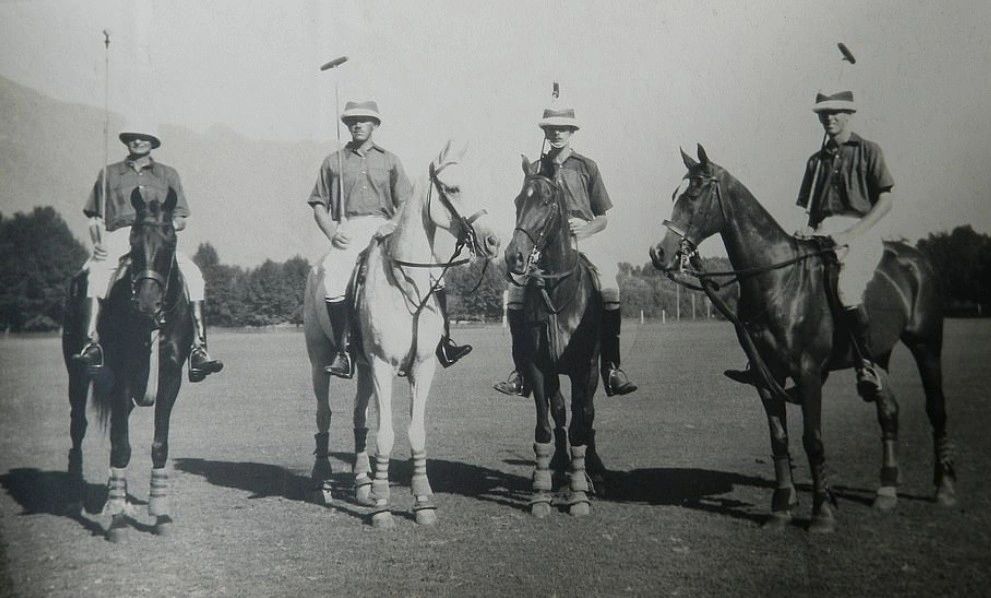
The story of the Reverso is as much about culture as it is about mechanics. In 1930, during the height of the British Raj in India, polo was the sport of gentlemen officers. Its intensity, however, posed a challenge: fragile wristwatches often shattered under the impact of mallets and collisions.
The legend goes that César de Trey, a Swiss businessman and watch dealer, was approached by a polo player frustrated by his broken crystal. De Trey carried the problem to Switzerland, where he shared it with Jacques-David LeCoultre, Antoine’s grandson. Together with the French engineer René-Alfred Chauvot, they devised a solution as ingenious as it was elegant: a rectangular watch whose case could swivel 180 degrees, presenting a solid metal back to the blows of the polo field.
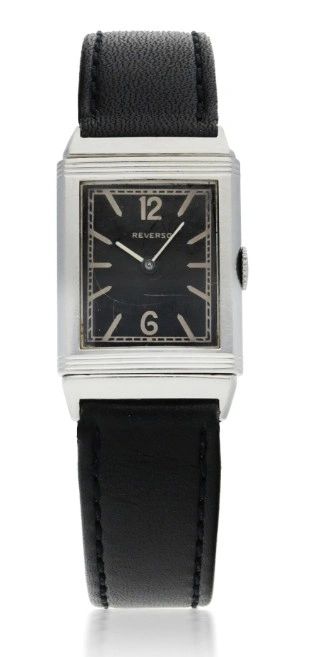
Chauvot’s design was patented in 1931. That same year, the first Reverso was born—an Art Deco masterpiece defined by clean lines, guilloché detailing, and a dial that could disappear with the flick of a finger. Its very name, derived from the Latin “I turn around,” perfectly captured the spirit of reinvention.
From Polo Grounds to Royal Wrists
The Reverso was more than a practical sports watch; it was a fashion statement. Its sleek, rectangular case resonated with the geometry of the Art Deco movement, making it instantly stylish beyond the polo field. Owners quickly began personalizing the solid casebacks with engravings—family crests, military insignias, or miniature artworks.
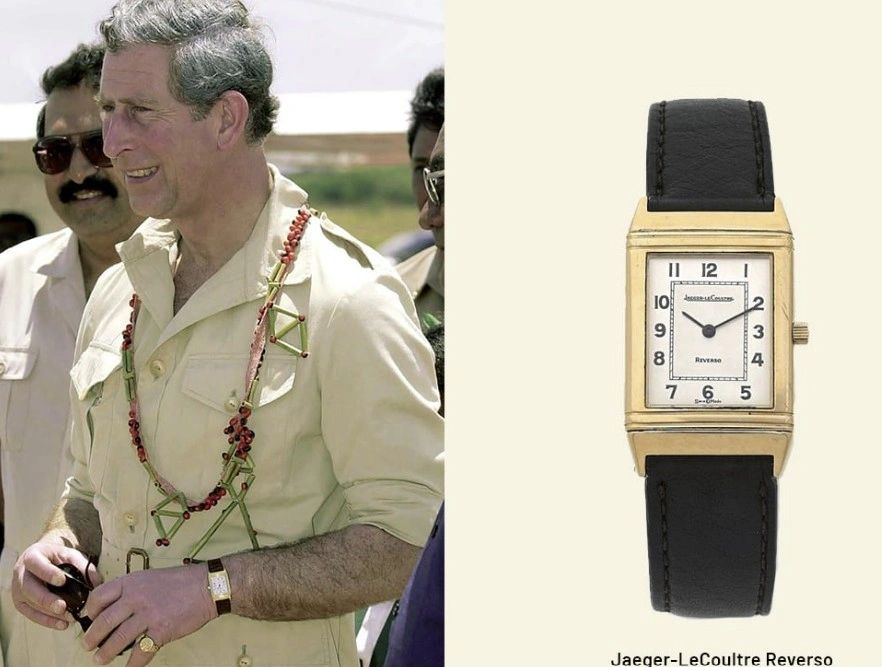
Some of its earliest adopters were luminaries of the age. Amelia Earhart is said to have worn a Reverso during her pioneering flights, one of which bore a map engraving commemorating her 1935 transatlantic journey. King Edward VIII owned a personalized piece with the royal coat of arms. King Hussein of Jordan was also a noted fan. The watch graced the wrists of adventurers and artists who found in its dual nature—a blend of utility and refinement—a reflection of their own eclectic lifestyles.
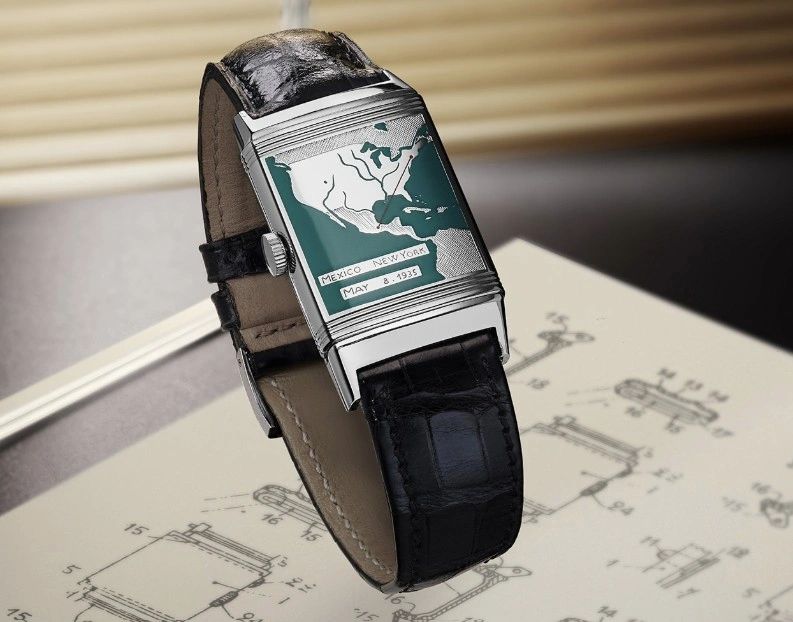
By the mid-1930s, Jaeger-LeCoultre expanded the line with small seconds displays and enamel dials, catering to both men and women. Yet as the world marched toward war and wristwatch fashions shifted toward rounder, simpler shapes, the Reverso’s popularity waned. By the late 1940s, it had all but disappeared from the catalogue.
The Italian Renaissance of the 1970s
Like many icons, the Reverso needed a champion to revive it. That figure appeared in the 1970s in the form of Giorgio Corvo, an Italian distributor who stumbled upon vintage Reversos in collectors’ circles. Recognizing their latent potential, Corvo persuaded Jaeger-LeCoultre to restart production.
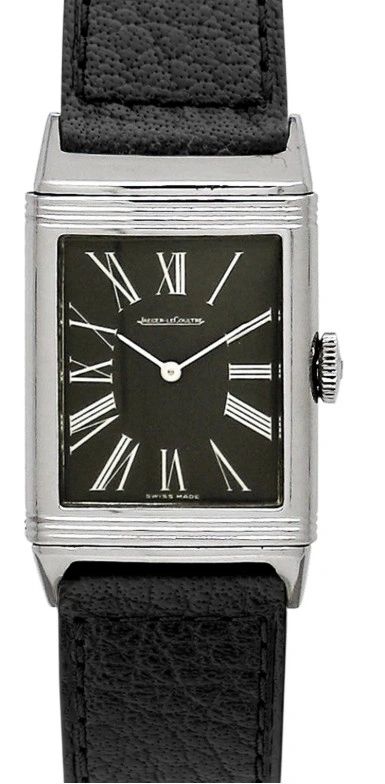
The first revival model appeared in 1972, nicknamed the “Casetta.” While modest in numbers, it rekindled interest in the reversible case. Yet it was in 1991—on the Reverso’s 60th anniversary—that Jaeger-LeCoultre fully reintroduced the line with renewed vigor. The celebratory editions, complete with sapphire crystals, water resistance, and automatic movements, marked the beginning of the Reverso’s second golden age.
The timing was serendipitous. As the world rediscovered Art Deco aesthetics in architecture and design, the Reverso once again appeared cutting-edge—yet timeless. Collectors and tastemakers embraced it not as a relic of polo but as a symbol of refined understatement.
A Canvas for Innovation and Artistic expression
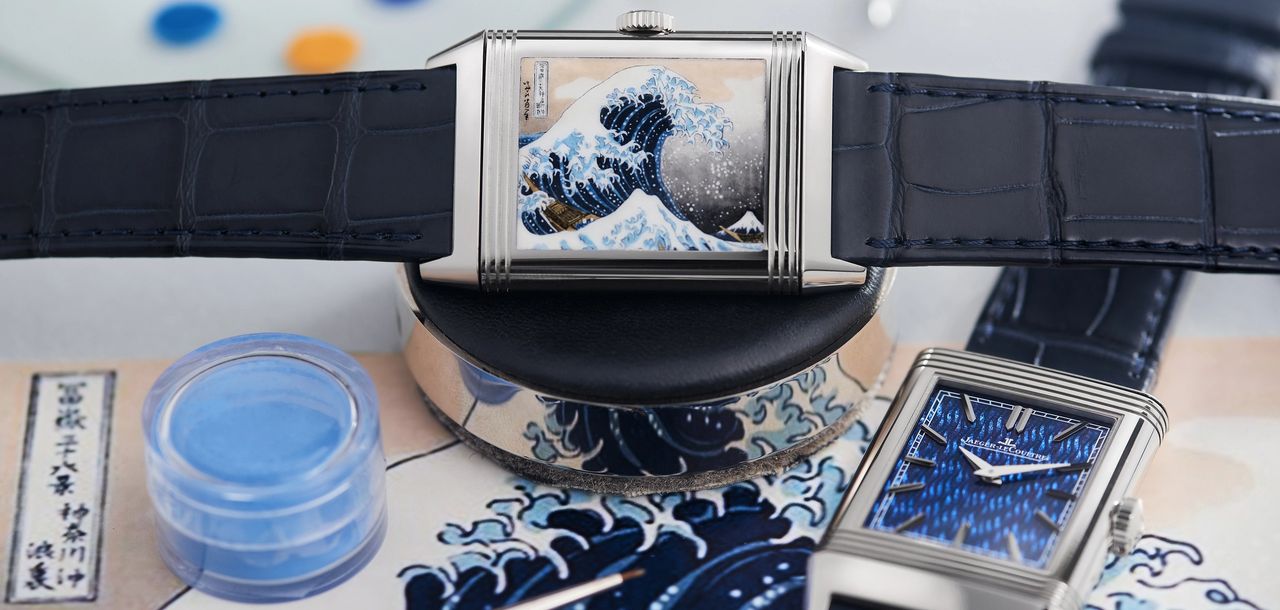
Over the following decades, the Reverso became Jaeger-LeCoultre’s canvas for experimentation. No other watch so perfectly embodied the maison’s dual mastery of mechanics and artistry.
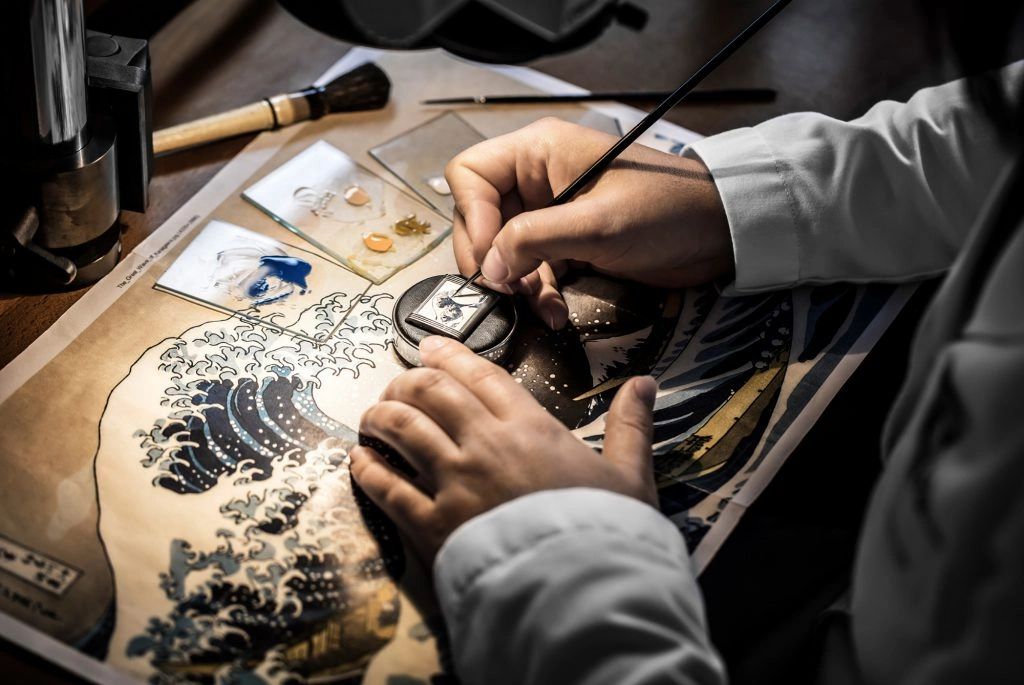
The maison has also turned the reverse side of the case into a literal canvas. Collaborations with enamellers and miniature painters have produced masterpieces such as the 2023 Reverso Tribute Enamel “Shahnameh,” which depicted Persian epics in painstaking detail. Each watch was as much a museum piece as a timepiece.
Modern Marvels and Record Prices
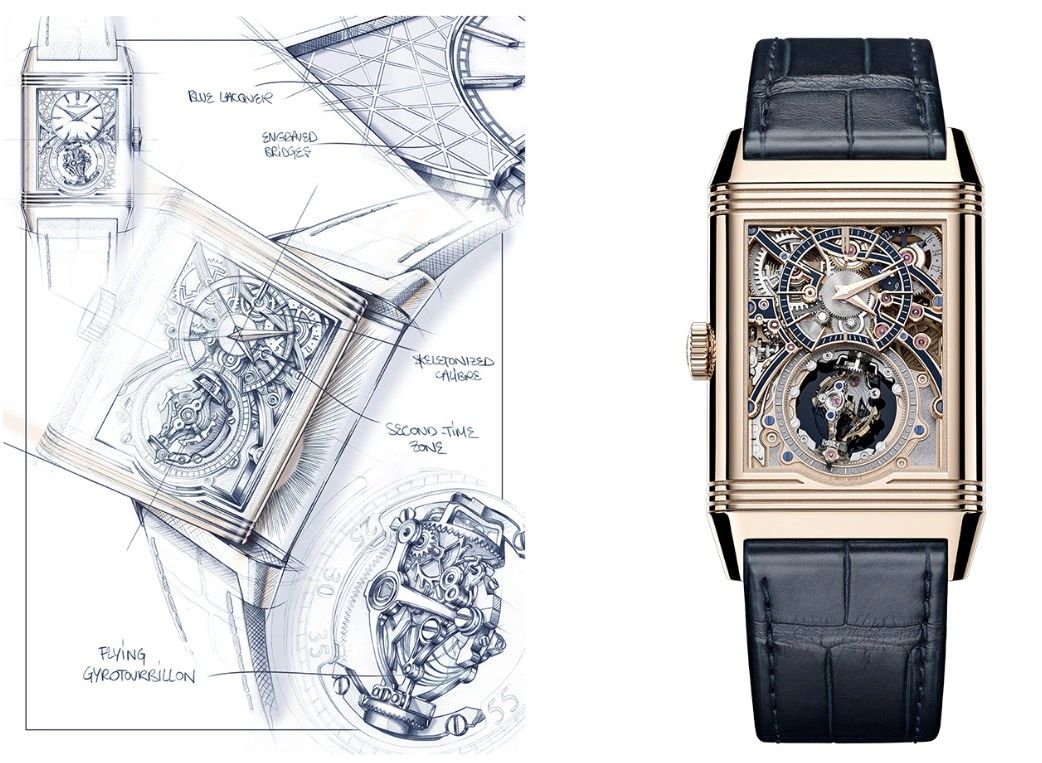
Today, the Reverso spans a remarkable spectrum. Entry-level models, such as the Reverso Classic, begin around $7,000—a gateway into high horology. At the other extreme lie pieces like the Hybris Artistica series or the Minute Repeater Tribute for the 90th anniversary in 2021, limited to just 10 examples and commanding prices upwards of half a million dollars.
At auction, vintage Reversos with rare enamel backs or military provenance have achieved six-figure sums, reflecting both scarcity and the growing recognition of the model’s historical importance. Collectors particularly prize early 1930s examples with original Art Deco numerals or unique engravings, as each tells a deeply personal story.
More Than a Watch: A Philosophy
What makes the Reverso truly enduring is not just its clever reversible case or its Art Deco elegance. It is its embodiment of time as something multidimensional. One side may tell the hour; the other may tell a story, carry a memory, or reveal a complication. In an age where most watches are variations on the same round theme, the Reverso dares to be different—and has done so consistently for nearly a century.
Article written by Omar, founder of The Watch Curators.


