

Rolex Before Daytona: The Birth of an Icon
Ask any collector—or anyone with even a passing knowledge of watches—to name the most famous chronograph in the world, and the answer is almost always the same: Rolex Daytona. For more than half a century, the Daytona has been the archetype of the luxury sports chronograph, but more importantly, for the last thirty years, it has been the benchmark of modern scarcity. Long before Audemars Piguet’s Royal Oak, Patek Philippe’s Nautilus, or Richard Mille's tonneau-shaped watches became permanently unobtainable at retail, the Daytona had already defined what it meant to be a watch you could never simply walk into a boutique and buy.
But to understand why the Daytona achieved such a mythical status, one must begin before Daytona—before Rolex was synonymous with a racing chronograph, when Hans Wilsdorf’s company was still laying the groundwork for innovation, reliability, and prestige.
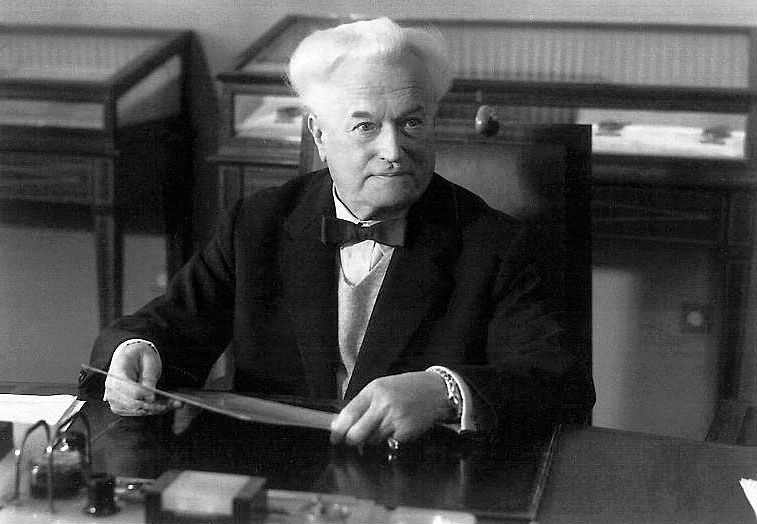
From Oyster Cases to Chronographs
Founded in 1905 in London as Wilsdorf & Davis, Rolex quickly distinguished itself by pairing Swiss-made movements from Aegler with durable, modern cases. The invention of the Oyster case in 1926 was a pivotal moment: Rolex solved the age-old problem of dust and water intrusion, ensuring wristwatches could accompany their owners through daily life without constant servicing.
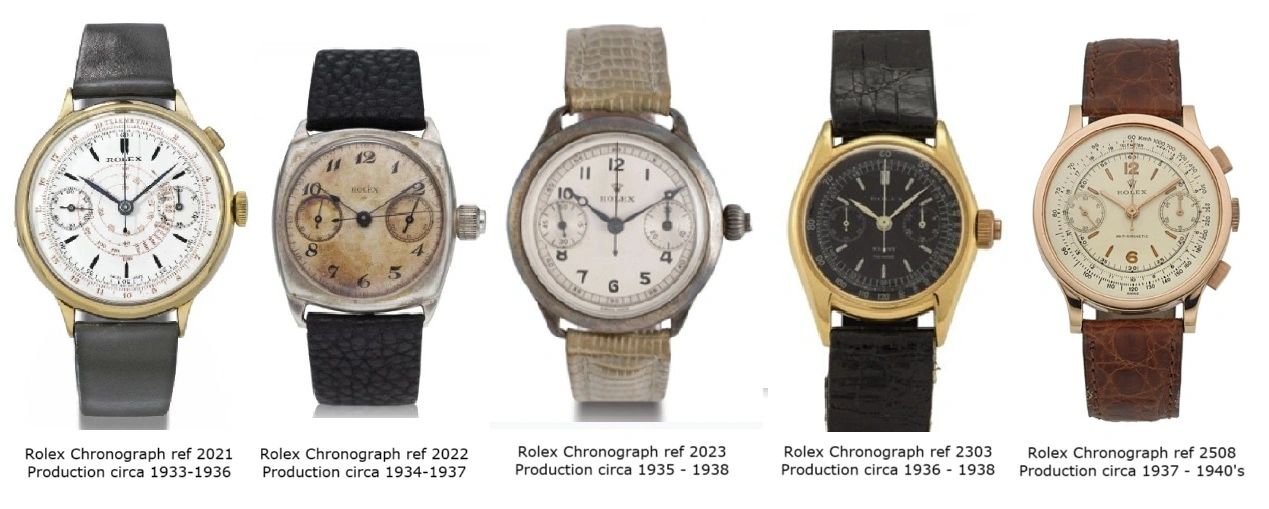
By the 1930s, chronographs were increasingly popular with professionals and sportsmen. Rolex responded with early references such as 2021, 2022, 2023, 2303, and 2508—elegant wrist chronographs with scales for telemeter and tachymeter readings. These models laid the foundation for what would later become the Cosmograph: a robust, purpose-built chronograph designed for racing.
The Pre-Daytona Rolex Chronographs
Before the launch of the Cosmograph Daytona, Rolex produced a small but fascinating group of chronographs now known among collectors as the Pre-Daytonas. These watches, including references like the 6034, 6234, and 6238, represent the evolutionary bridge between Rolex’s mid-century two- and three-register chronographs and the iconic Daytona line that would follow.
The Ref. 6034 and 6234, produced in the 1950s, often featured dials crowded with telemeter and tachymeter scales—functional instruments for engineers, scientists, and sportsmen. They were powered by manual-wind Valjoux calibres and cased in steel or gold, with proportions typical of the era (36 mm). While not branded as “Cosmographs,” their DNA is unmistakably tied to what would become the Daytona.
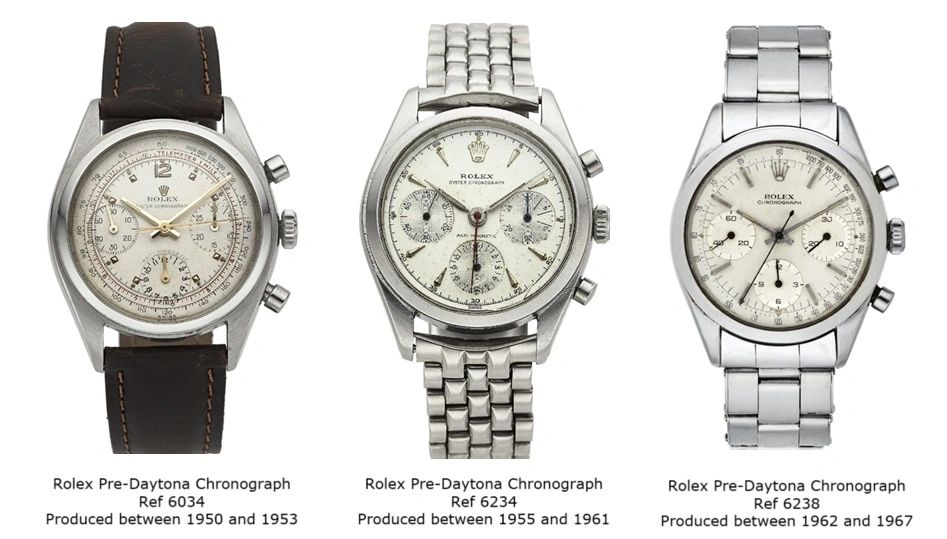
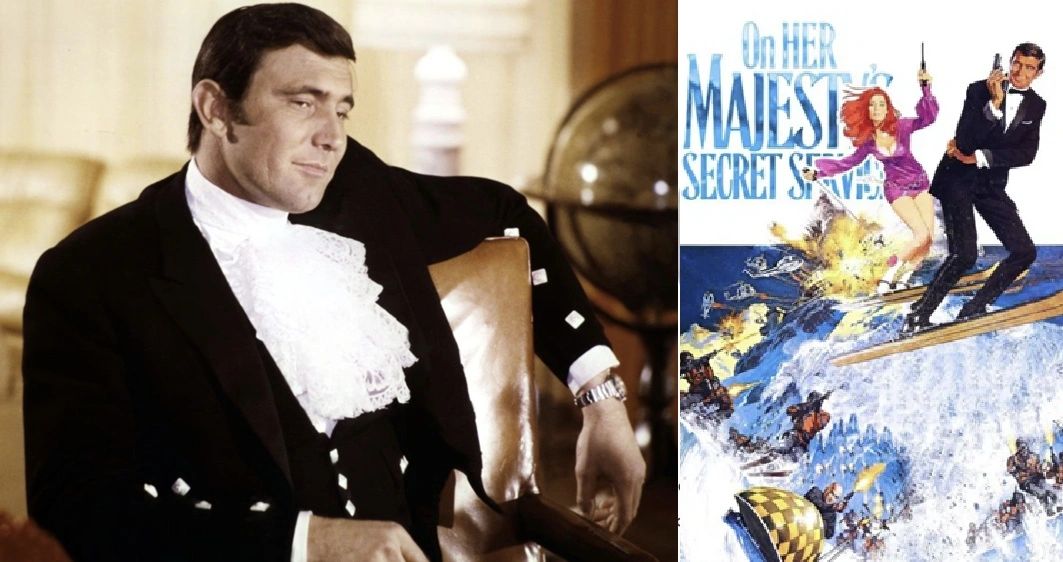
By the early 1960s, Rolex introduced the Ref. 6238, sometimes called the “Pre-Daytona” proper. Its cleaner, more modern dial design and applied baton markers marked a shift toward the pared-down, high-contrast aesthetic of the upcoming 6239 Cosmograph. Produced until 1967, the 6238 was even worn by James Bond (George Lazenby) in On Her Majesty’s Secret Service. Today, these Pre-Daytona references are prized not only for their rarity but also for the way they illustrate Rolex’s steady march from utilitarian chronographs to one of the most enduring icons in watchmaking.
The Birth of the Daytona (1963)
The Rolex Cosmograph reference 6239, launched in 1963, marked the beginning of what we now call the Daytona. With its tachymeter bezel engraved on the outer ring, it was designed specifically for motorsport timing. Early dials even read “Cosmograph” alone; the “Daytona” signature, added later to honor Rolex’s partnership with the Daytona International Speedway, cemented the watch’s identity.
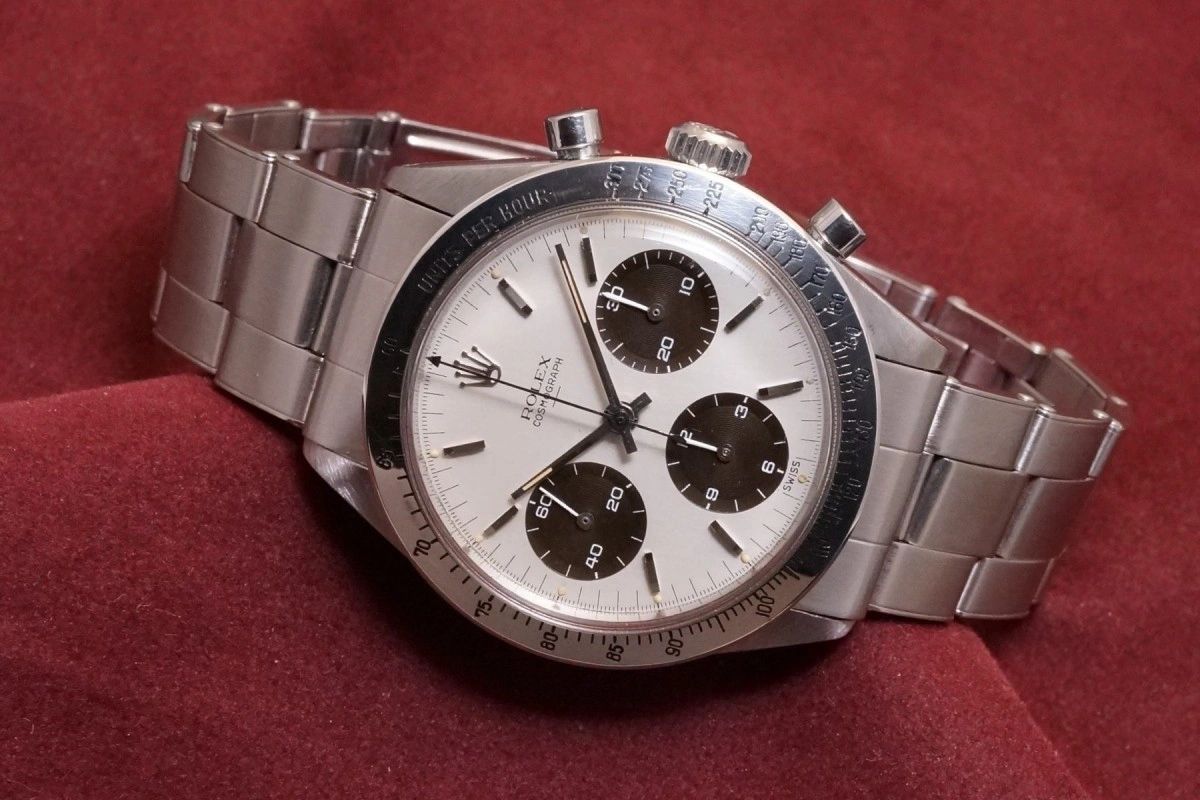
The 6239 introduced the now-classic tri-compax dial layout, often contrasted with contrasting registers, and was powered by the hand-wound Valjoux 72 movement, heavily modified by Rolex for durability. It was a functional tool, but its proportions, sharp case lines, and bold dials gave it enduring aesthetic appeal.
Key References of the Hand-Wound Era
The “pre-Daytona” (ref. 6238, produced briefly in the early 1960s) was a transitional model, but once the Daytona name appeared, Rolex committed to the line. The early hand-wound era (1963–1988) includes some of the most collectible Daytonas today:
- Ref. 6239 (1963–1969): The first Daytona, featuring steel bezels with engraved tachymeters. Famously worn by Paul Newman, whose own exotic-dial 6239 became the most famous Daytona of all.
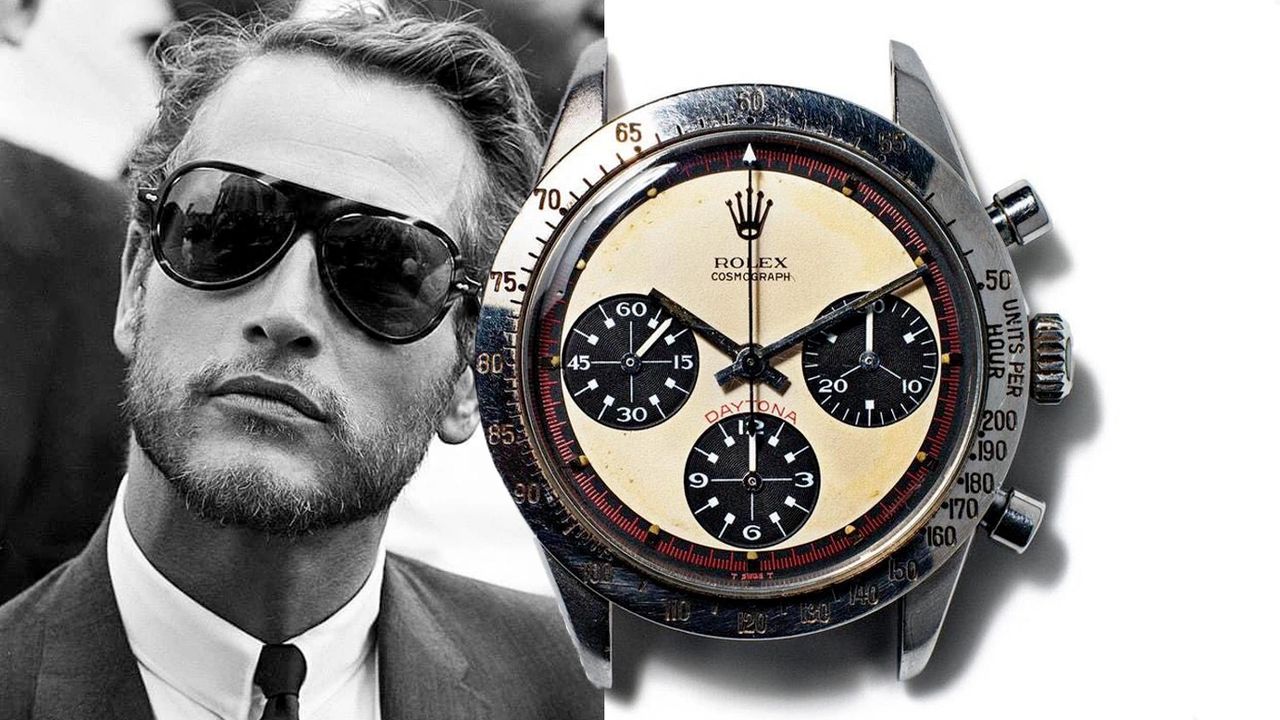
- Ref. 6241 (1965–1969): Introduced the black acrylic bezel insert, giving the Daytona a more modern, sportier look.
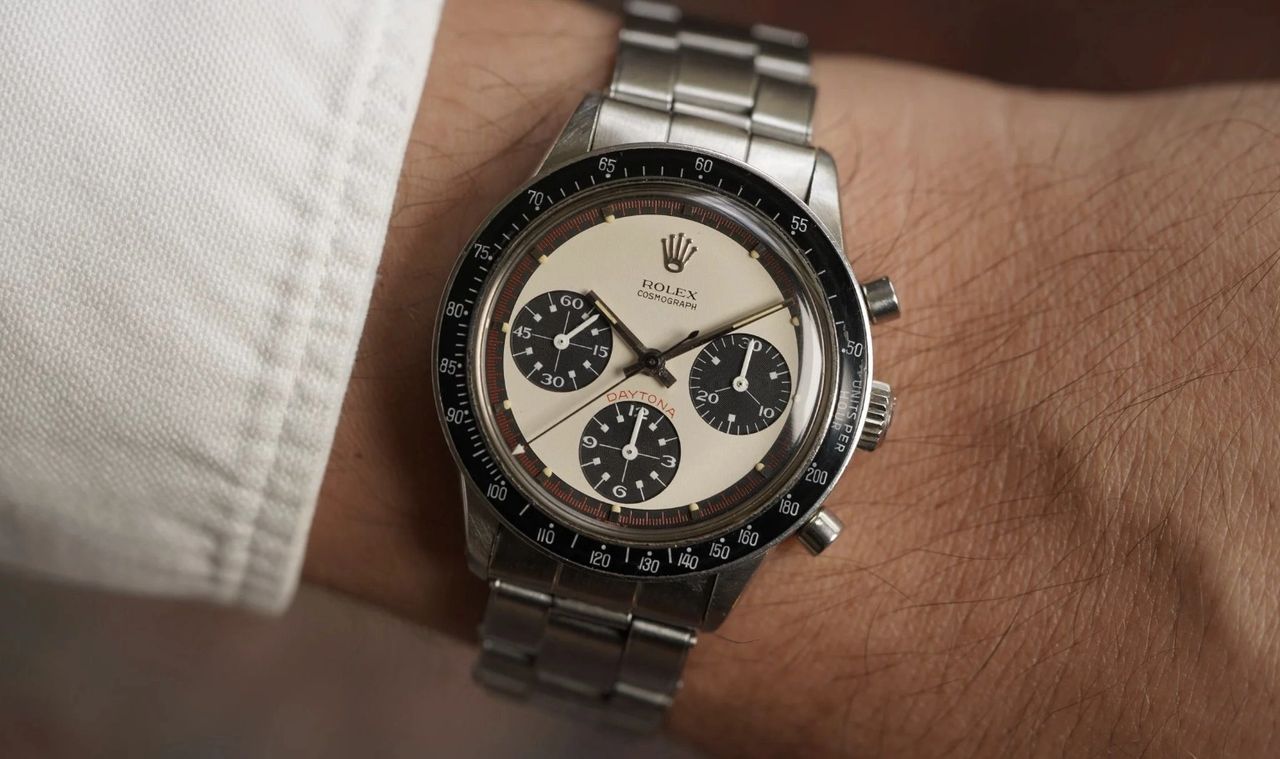
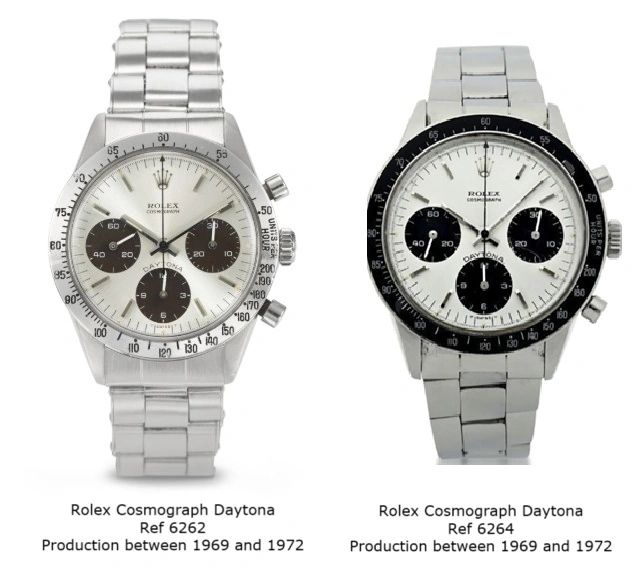
- Ref. 6262 and 6264 (1969–1972): Transitional models with updated Valjoux 727 movements (higher frequency for improved accuracy). Produced in small numbers and highly collectible.
- Ref. 6263 and 6265 (1971–1988): The ultimate manual-wind Daytonas, with screw-down pushers for improved water resistance. The 6263 featured an acrylic bezel, while the 6265 retained a steel engraved bezel. Both references remained in production until the late 1980s and are among the most desirable vintage chronographs in the world as they offer great value for money in comparison to earlier, rarer, and much pricier examples.
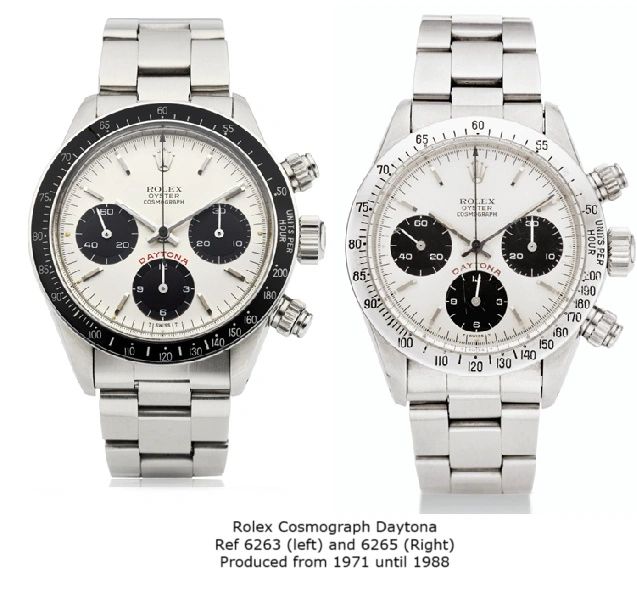
These watches were never produced in large quantities, and their commercial success at the time was modest. Ironically, the very fact that they weren’t instant hits created their later rarity, and with it, their modern-day legend.
The Paul Newman Effect
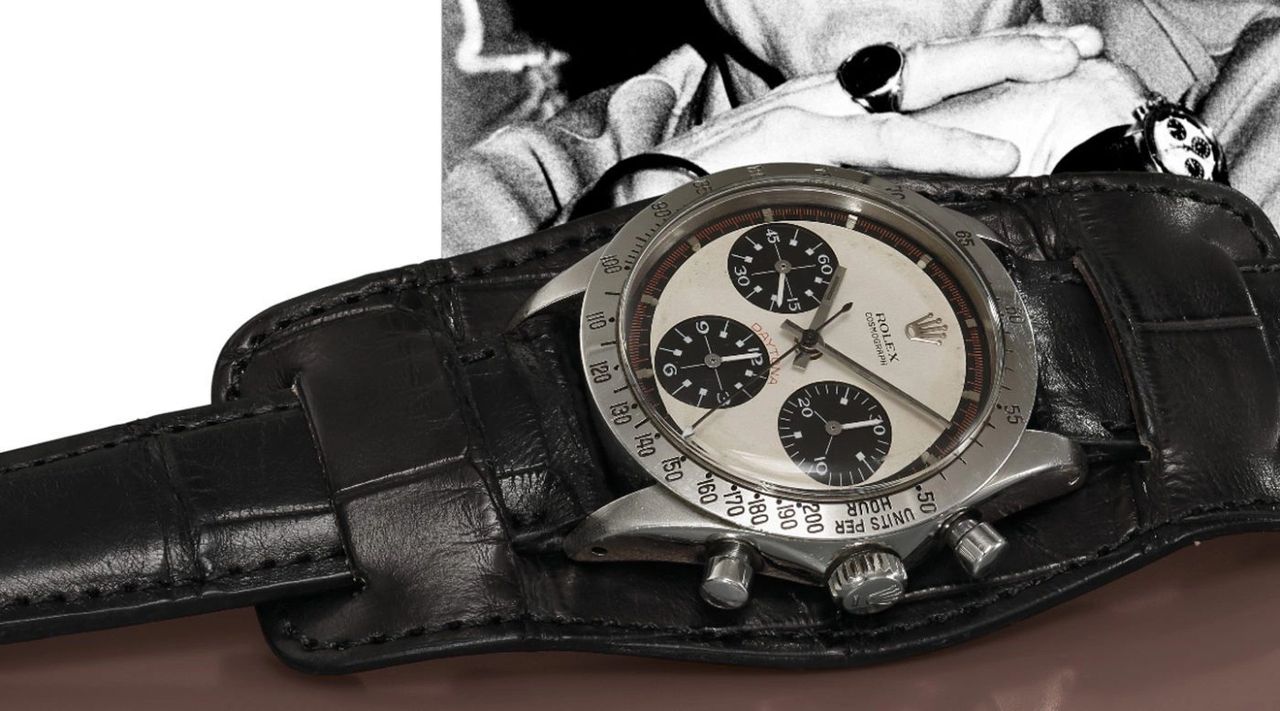
Among these early references, the so-called “Paul Newman” dials deserve special mention. Officially known as exotic dials, they featured Art Deco-inspired numerals and square markers within the sub-dials. Initially slow sellers—many languished in retailers’ windows—they became cultural icons once it was discovered that actor and racing enthusiast Paul Newman wore one regularly.
In 2017, Newman’s personal Daytona 6239, with its cream dial and black registers, was auctioned by Phillips for an astronomical $17.8 million—at the time, the most expensive wristwatch ever sold. That single event crystallized the Daytona’s position as the collector’s chronograph, and ensured the “Paul Newman” moniker would forever carry a mystique unmatched by almost any other watch.
The Automatic Era: Zenith Daytona (1988–2000)
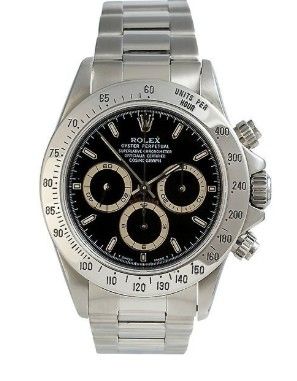
By the late 1980s, the market for mechanical watches had been transformed by the quartz crisis. Rolex responded in 1988 by releasing a radically modern Daytona: the Ref. 16520, powered by the El Primero-based Zenith 4030 calibre, modified by Rolex for lower frequency and greater robustness.
This new generation brought the Daytona to 40 mm, gave it sapphire crystals, and introduced steel bezels with engraved tachymeters. The waiting list phenomenon truly began here: the 16520 was produced in limited supply, and demand quickly outpaced availability. Collectors today prize early “floating Cosmograph” dials, “inverted 6” variants, and Patrizzi dials (with registers that have aged to a pleasing brown hue).
The In-House Era (2000–Present)
In 2000, Rolex debuted the Ref. 116520, the first Daytona powered entirely by an in-house calibre: the Calibre 4130. With a simplified and highly efficient chronograph mechanism, extended power reserve, and proven robustness, it set a new technical benchmark.
The 116520, produced until 2016, has already become collectible in its own right, with early “thin hand” and “APH dial” variants attracting premiums. In 2013, and to mark - rather quietly - the Daytona's 50th anniversary, Rolex released the first ever full platinum Daytona under the reference 116506, with a brown ceramic bezel and an ice-blue dial. This was succeeded by the Ref. 116500LN (2016–2023), which introduced the black Cerachrom ceramic bezel—an instant hit that brought modern Daytona design closer to the vintage 6263 in spirit.
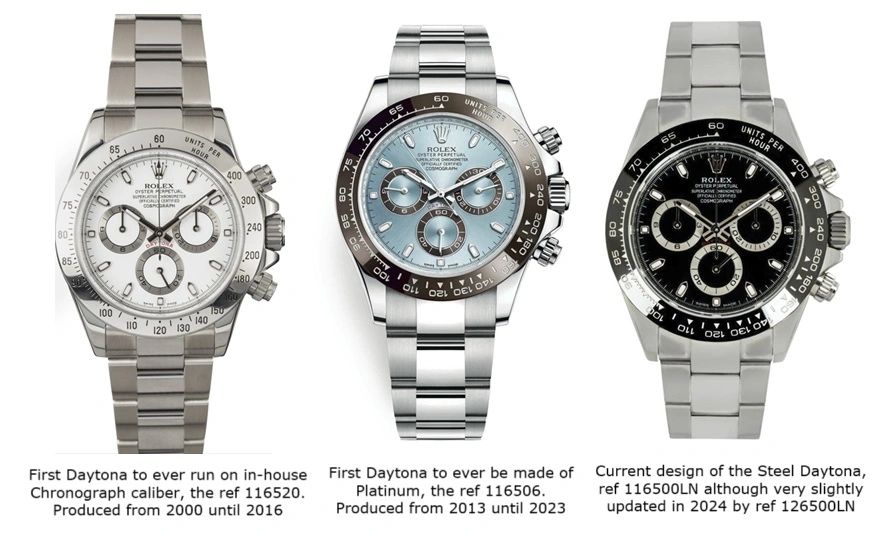
In 2023, Rolex unveiled the current generation, Ref. 126500LN, with subtle case refinements and a new-generation calibre 4131. Predictably, demand far exceeds supply, and the waiting lists remain legendary.
Scarcity as DNA
What makes the Daytona unique is not just its design or motorsport heritage but its unbroken aura of scarcity. For more than thirty years—since the Zenith-powered era—it has been impossible to buy a steel Daytona at retail without a lengthy wait. While other brands have since adopted similar strategies of limited supply, the Daytona stands apart as the original grail watch of modern collecting.
It is not hype; it is consistency. The Daytona was the first sports chronograph to become permanently unavailable on the shelf, and it has remained so ever since.
An Enduring Icon
Today, the Daytona is more than a watch. It is a symbol of prestige, achievement, and passion for watchmaking. From the hand-wound 6239 to the ceramic-bezel 126500LN, from Paul Newman’s $17.8 million auction star to the daily wearers of modern collectors, the Daytona embodies what makes Rolex Rolex.
In a market where scarcity now defines desirability, the Daytona was—and still is—the pioneer. It wrote the rulebook on how a chronograph could transcend utility to become an enduring cultural icon.
Article written by Omar, Founder of The Watch Curators The Iconic Rolex Daytona paul newman daytona collecting watches


