

Beyond the Obvious: Where the Real Value Lives
If you read Part I, you know why most people start with Tudor, Omega, or Longines. Brand recognition. Resale value. Safety. But here's what we didn't tell you: some of the most interesting watchmaking right now isn't coming from Switzerland. It's coming from microbrands in France, independent designers in Dubai, Japanese workshops you've never heard of—teams who care more about making beautiful watches than chasing brand equity.
The trade-off? Almost nobody will recognize the name on your wrist. Resale value can sometimes be brutal. So why choose this path? Because by watch number two or three, you stop caring what other people think. You start wearing watches for yourself. That's when things get interesting.
THE MICROBRAND REVOLUTION
The big Swiss brands have massive overhead—corporate structures, celebrity ambassadors, boutique networks, marketing budgets that could fund a small country. All of that gets baked into your $4,000 Tudor. Microbrands cut that out. No celebrity endorsements. No retail overhead. Just small teams sourcing quality components (ften the same movements big brands use), designing beautiful watches, and selling direct-to-consumer at a fraction of traditional prices.
The result? Watches with finishing and materials that rival $8,000-10,000 pieces from established brands—for less than half the price. The catch? Nobody's heard of them, and resale value is initially nonexistence (though some like Furlan Marri and Baltic are building value retention). But if you're buying to wear, not flip, that shouldn't matter.
BALTIC: VINTAGE DONE RIGHT
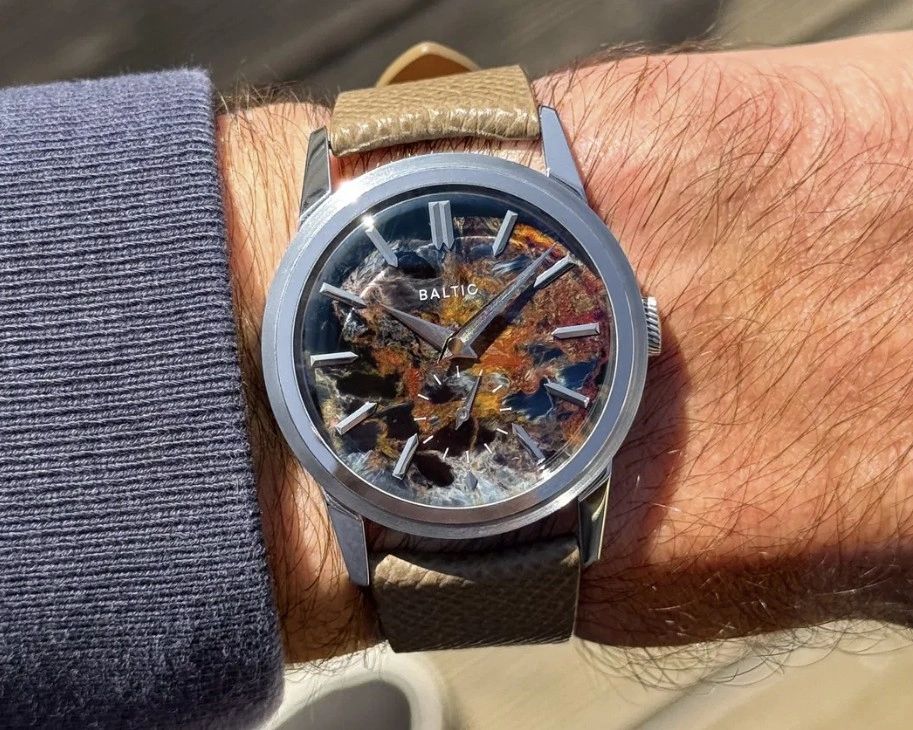
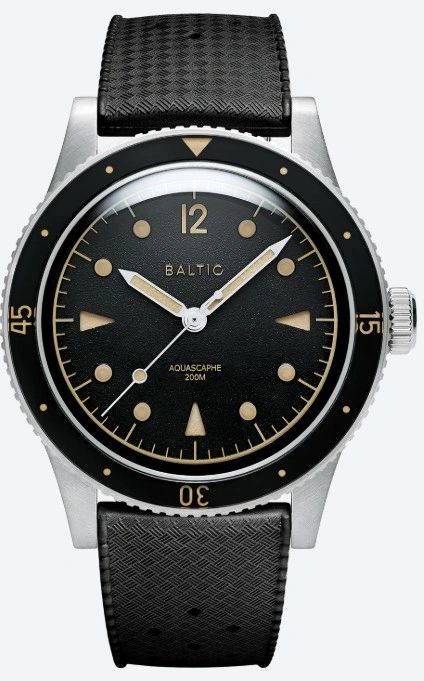
Baltic launched in 2017 with a simple premise: take the best vintage designs from the '60s and '70s, modernize them with quality components, and sell at honest prices. The Aquascaphe dive watch runs $650-750. The Tricompax chronograph hits around $1,600 with a Valjoux-based movement (same family as vintage Rolex Daytonas that sell for $50,000+).
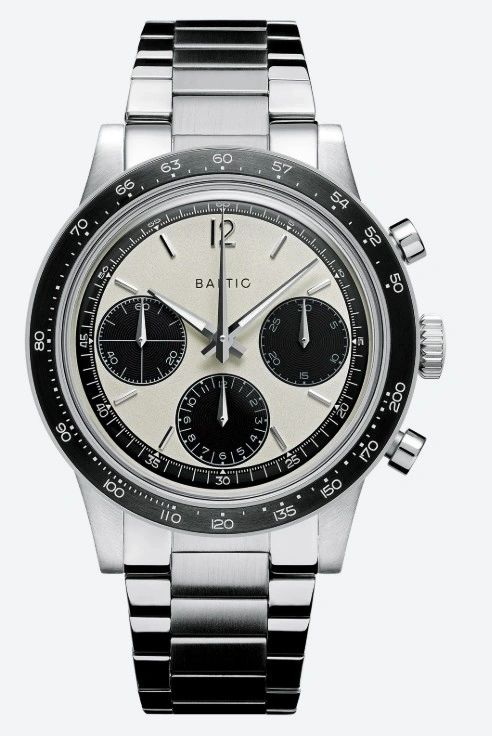
What makes Baltic special is restricted. Perfect 38-39mm proportions. Clean dials. Subtle branding. They understand that vintage-inspired doesn't mean fake patina everywhere. The catch? Nobody's heard of them outside enthusiast circles. Resale sits around 70-80% of retail—better than many established brands.
Age consideration: Perfect for your 20s if you love vintage aesthetics without vintage hassles. Great second watch in your 30s. In your 40s+, only if you're genuinely into design history over logos.
Our advice: Buy an Aquascaphe or Tricompax, wear it, enjoy it. Don't think about resale.
FURLAN MARRI: INSTAGRAM MEETS GENUINE QUALITY
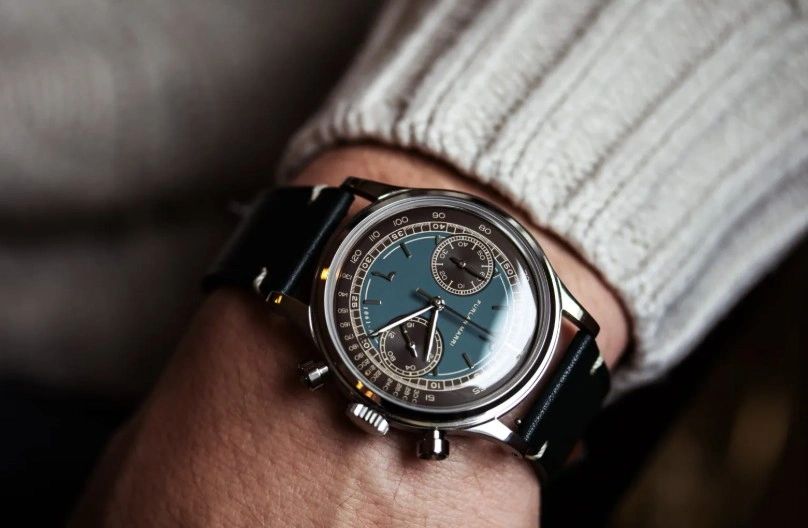
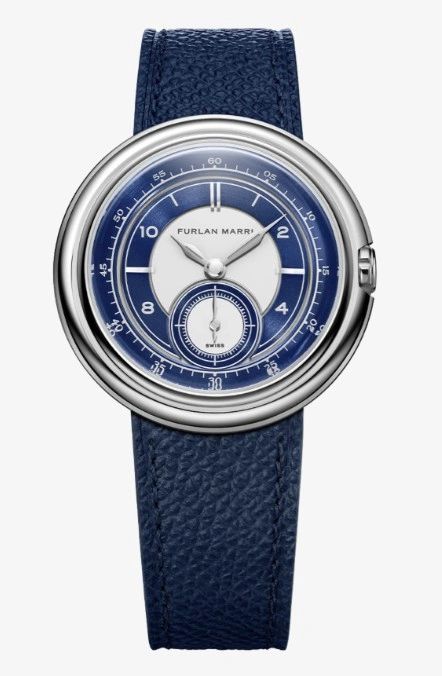
Controversial. Some dismiss them as "Instagram watches." Others say they're just repackaging vintage Universal Genève designs. Both reviews are fair. But the watches look stunning, and the price-to-quality ratio is impressive.
Pieces run $900-1,400. Swiss-made cases, solid finishing, reliable movements. The Ref. 6061-1 chronograph takes inspiration from vintage Universal Geneva Compax models (now $8,000-15,000 at auction). The Furlan Marri version? $1,200. Same aesthetic DNA, modern reliability, zero vintage hassles.
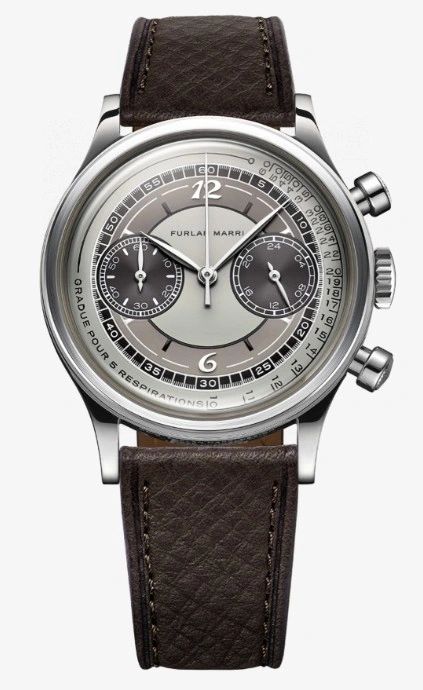
These aren't original designs—they're exceptionally well-executed homages. If that others you, move on. But if you want vintage chronograph looks without $10K+ or 60-year-old service nightmares, Furlan Marri delivers. Some limited editions actually appreciate, which is wild for a 2021 brand. Don't count on it though.
Who's this for? Late 20s to early 30s, active on Instagram, appreciate vintage with modern convenience. In your 40s genuinely loving vintage chronographs? Works. Trying to look younger? Skip it.
MARCH LA.B: CALIFORNIA COOL
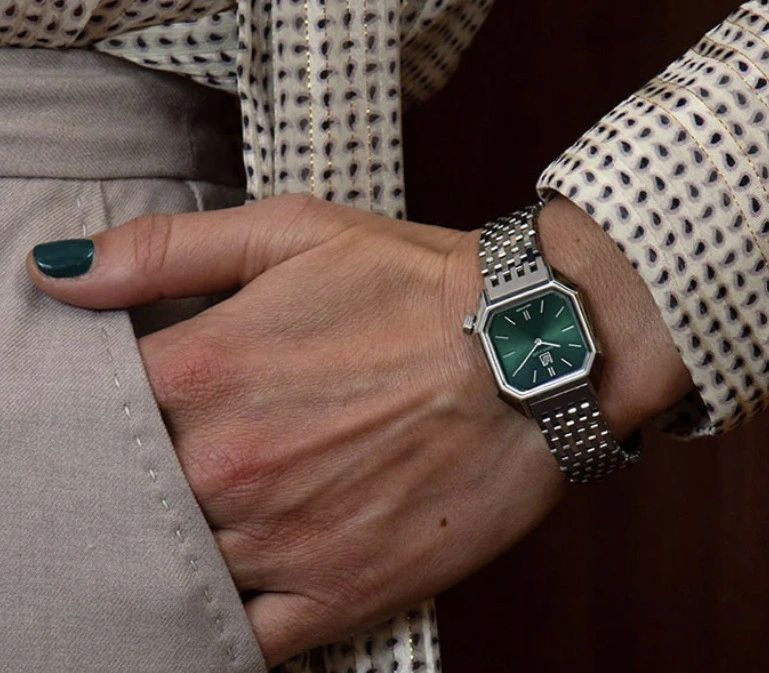
March LA.B is 1970s California car culture filtered through French design. Effortless cool that's hard to describe but immediately recognizable. Prices run $1,200-2,800. The AM1 series sits around $1,500-1,800. Swiss movements, solid construction, design like nothing else. Colorful dials without being loud. Perfect proportions. It is also one of the few Microbrands out there that cater for the feminine audience!
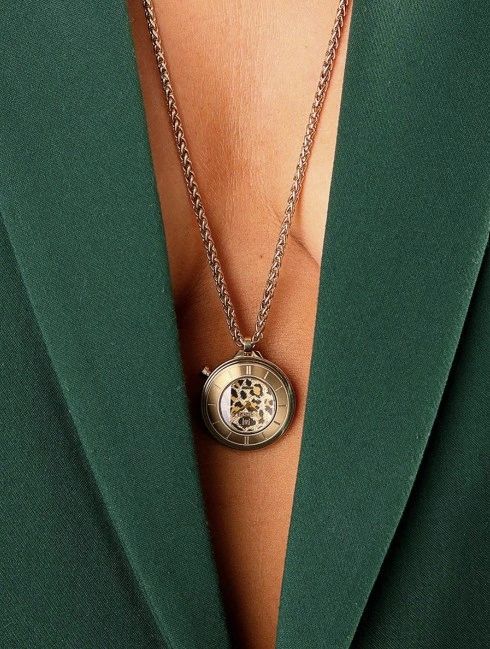
They've built a cult following without industry validation. No GPHG awards. No Hodinkee reviews. Just cool watches for people who value design over heritage. Resale? Around 50% if you're lucky. But if you're wearing it for 10+ years, who cares?
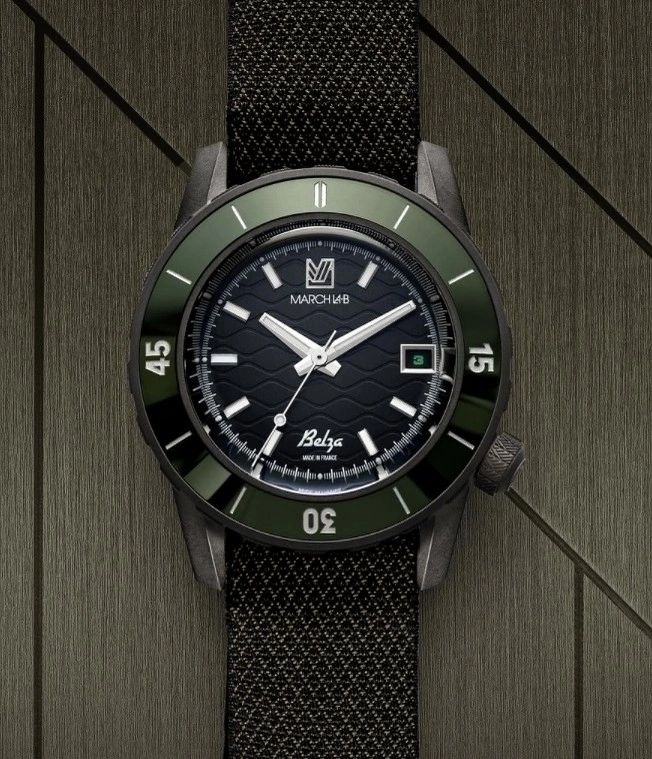
Who should buy this? 30s, creative industries (design, architecture, fashion, tech), want something different from corporate Swiss. 40s with creative background or California aesthetic. Finance or law? Probably not your vibe. 20s? Wait until your style identity is established.
IKEPOD: DESIGN THAT REFUSES TO DIE
Founded in 1994 by Marc Newson (Apple products, private jets), Ikepod made futuristic watches that looked like nothing else. They died in 2012. Resurrected in 2022 by owners who understand Newson's designs were ahead of their time.
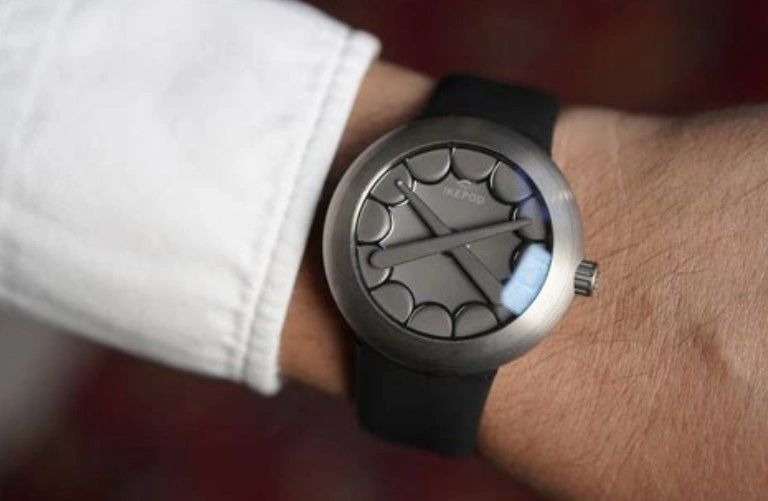
Current prices: $2,400-4,500, most around $3,000-3,500. Distinctive Newson-designed cases (sculptural shapes from a modern art museum), automatic movements, designs from one of our generation's most important industrial designers. Original '90s/'00s Ikepods now trade for $3,000-20,000.
Who's this for? Design nerds who can discuss Dieter Rams and know Marc Newson. Work in design, architecture, or fields where aesthetic innovation matters. Everyone else? Too weird. Polarizing. You either love them or don't get them.
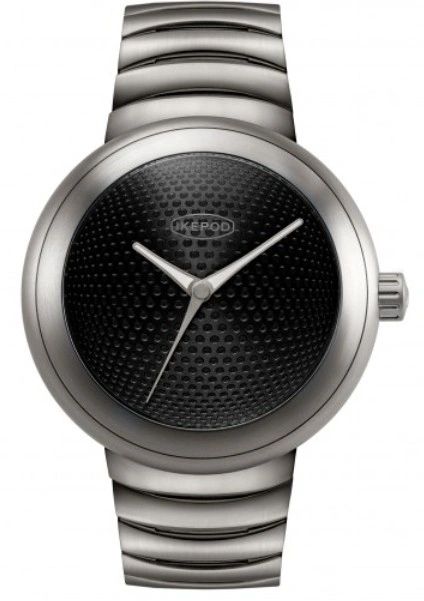
Works best in 30s and 40s when established enough to wear something genuinely different. Don't buy because you think it'll appreciate it. Buy because you love Newson's work.
MAGANA: PHILOSOPHY OVER FLEX
Full disclosure: our founder's brand. Biased as it gets. But MAGANA represents "value beyond the obvious."
TRIBUTE collection starts at $2,000. Well-designed watch, reliable Miyota automatic triple date movement, solid finishing. Philosophy-first approach prioritizing mindfulness over flexing. Not trying to be Rolex. Trying to make you think about time differently. The brand plants 212 trees in sub-Saharan Africa for EVERY watch sold.
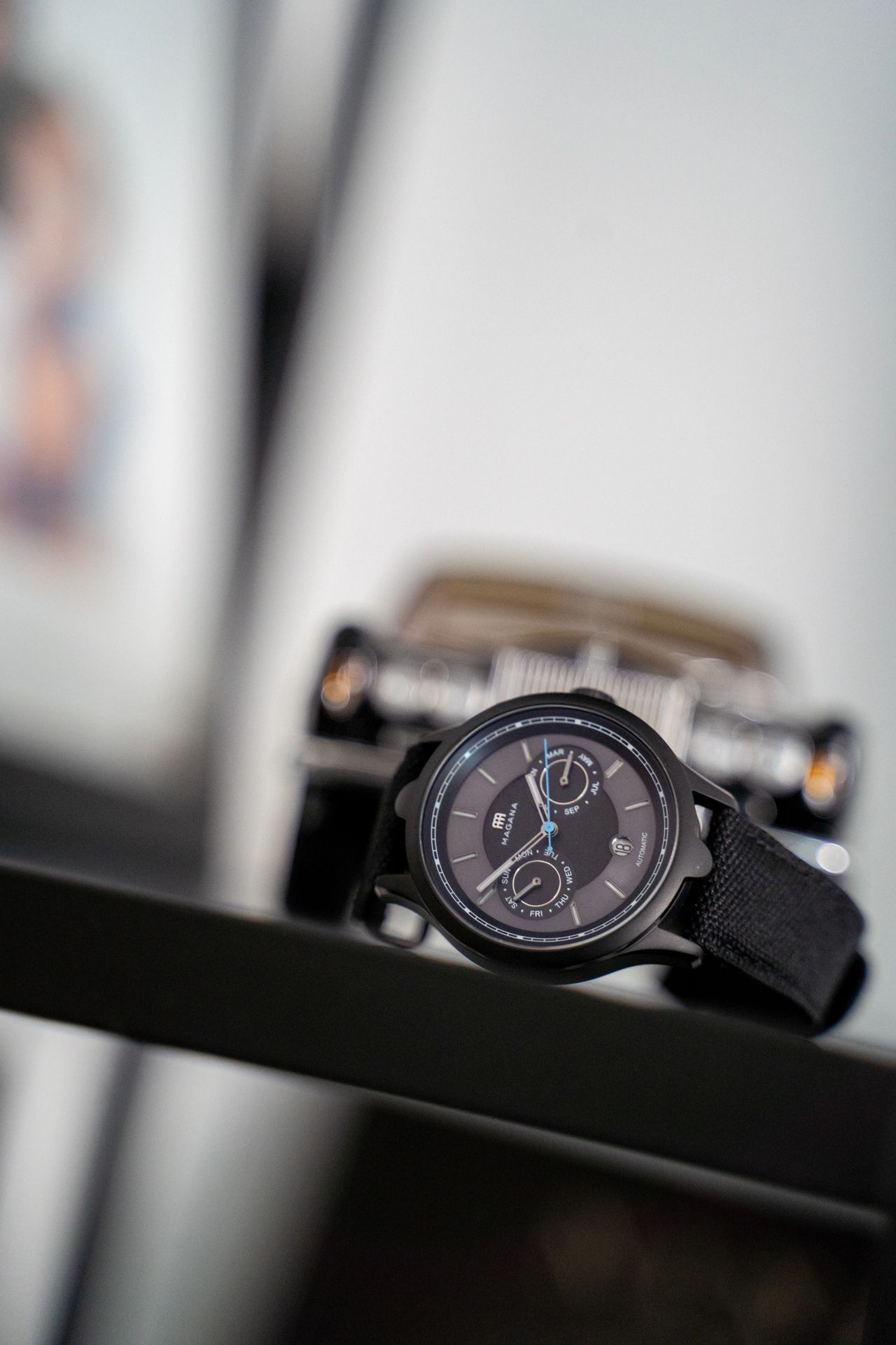
TANJA collection launches February/March 2026. Vintage-inspired, ultra-slim 8mm case, 37mm width (perfect for both genders). Natural stone dials: Malachite, Aventurine, Meteorite. Under $1,000, varies by dial choice. But, like other internet-only microbrands, MAGANA covers International shipping and plants on your behalf 212 trees in sub-Saharan Africa as part of their roadmap to sustainability!
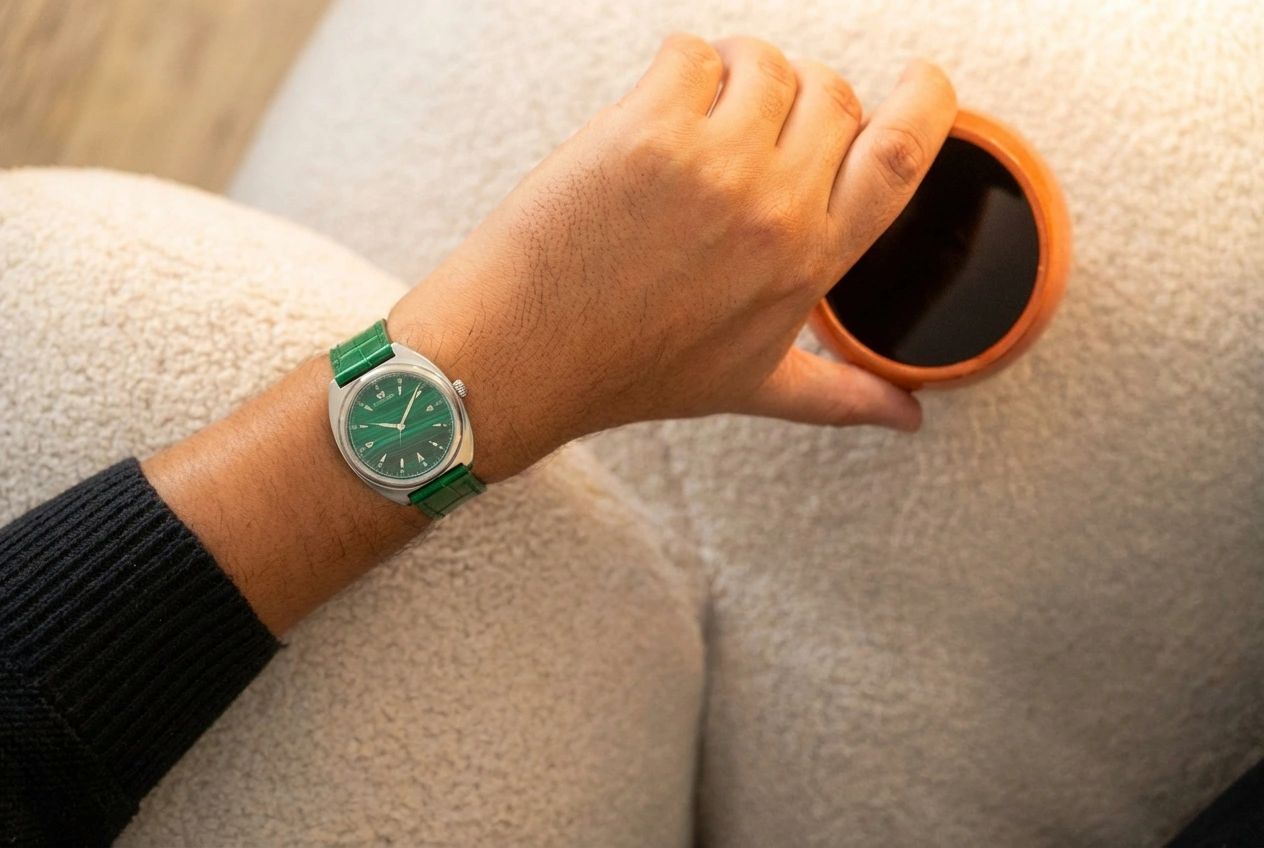
Who should buy? 20s wanting something unique showing independent thinking. 30s building a collection, perfect weekend watch. 40s? Only if you genuinely connect with the philosophy.
Reality check: Won't impress anyone who doesn't understand watches. But if you're buying because you love it, not to show off, that's irrelevant.
THE OTHERS
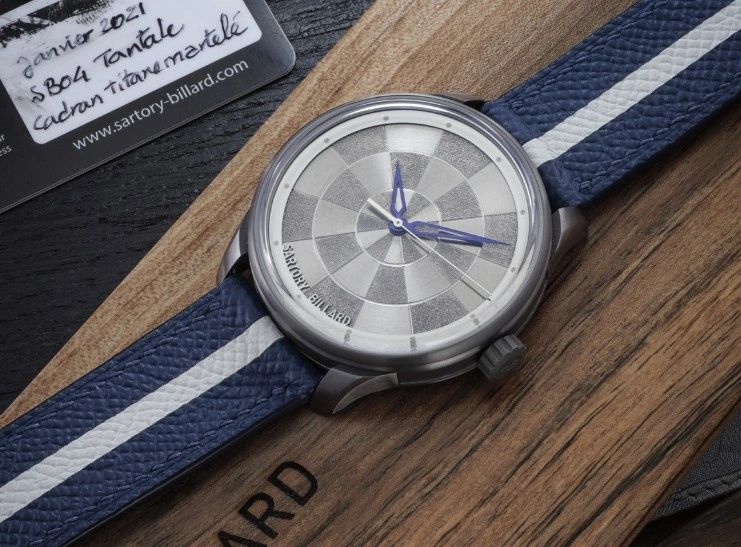
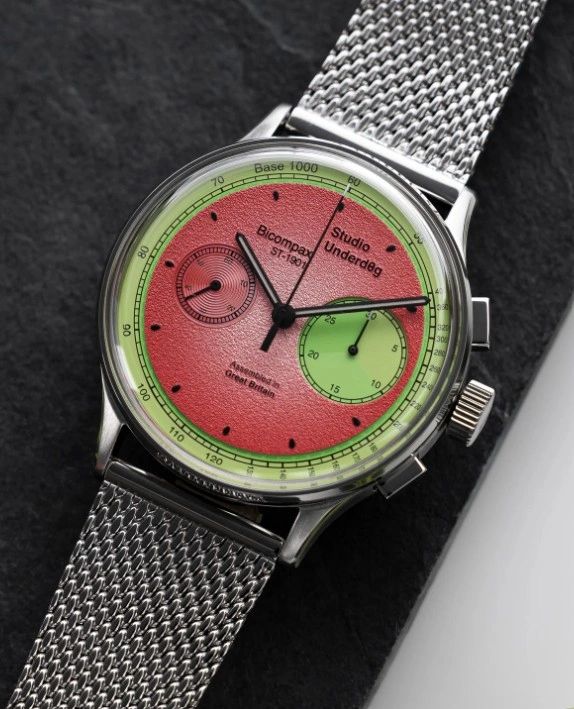
In truth, there are literally hundreds of Microbrands available nowadays offering various levels of quality, rarity and designs... Not all are equal obviously, but while we can't deep dive into every single one of them, we're happy to name a few for you to look at, as these are the ones we humbly deem to be amongst the most interesting ones. Whenever you have a moment, have a look at these brands: Anordain (from Scotland), Christopher Ward (UK), Farer (UK), Kurono Tokyo (Japan), Otsuka Lotec (Japan), Sartory Billard (Switzerland) and Studio Underd0g (UK). We could name a lot more, but these are - in our opinion, amongst the ones that are truly ahead in the game as they've done a fantastic job.
THE COLLECTION STRATEGY
Smart collectors: buy one "safe" watch (Tudor or Omega from Part I), then fill out with microbrands offering better design, finishing, or innovation for the money.
Watch #1 ($3,000-4,500): Tudor Black Bay 58 or pre-owned Omega Aqua Terra. Your "serious watch" for credibility.
Watch #2 ($800-1,500): Microbrand reflecting your taste. Baltic for vintage. March LA.B for design. MAGANA for philosophy.
Watch #3 ($1,200-2,000): Something genuinely different. Ikepod for industrial design. Furlan Marri for chronographs.
Total: $5,000-8,000, three watches covering different aesthetic territories. The Tudor handles formal occasions. Microbrands express personality.
Compare that to someone spending $7,000 on one Omega Seamaster. Same thing everyone else bought. Where's the personality?
WHY THESE BRANDS MATTER
The watch industry is changing. The old model—Swiss brands controlling everything while charging premiums for "heritage"—is breaking down. Microbrands prove you can make exceptional watches without centuries of history or billion-dollar marketing budgets.
In five years, wearing an interesting microbrand will signal more watch knowledge than wearing a Rolex. Anyone with money can buy a Rolex (we love Rolex—one of the most impressive brands ever). But finding a Baltic, understanding why it matters, choosing March LA.B for design—that shows genuine enthusiasm for horology, not just flexing.
Collectors buying these brands now are building collections that will look prescient in a decade. Watches from brands that become important, not just brands that were always important.
WHAT TO DO NEXT
You now have the full picture. Safe plays (Tudor, Omega, Longines) versus real value and innovation (microbrands and independents). The trade-offs: brand equity and resale versus design innovation and price-to-quality ratio.
Make a choice: watch that impresses others, or watch that impresses you? At this budget, you can't have both.
Our advice: First luxury watch? Start with Part I. Get the Tudor or pre-owned Omega. Build that foundation. Watch two or three? Explore microbrands. You'll appreciate them more once you understand establishment brands.
Already past your first luxury watch? This is where it gets fun. Buy Baltic for beautiful design. Buy Furlan Marri for vintage chronographs without vintage hassles. Buy MAGANA because independent brands deserve support. Buy Ikepod for Newson's work.
Stop buying watches to impress other people. Start buying because they make you happy. That's the whole point.
Omar Chaoui runs The Watch Curators in Dubai, where he sources and trades watches from microbrands to major manufactures. If you want to explore any brands covered in this guide—or help finding something we didn't mention—reach out at thewatchcurators.com.
www.thewatchcurators.com – All rights reserved - 2025


